Skip to Proposal
WayBuilders × Oregon I&ELearning Dashboard
Original proposal · Retained for reference. View the current OEN residency proposal →

A Proposal for the Lemelson Foundation · 2027–2028

Catalytic
Capacity Building

Distinct strengths.
Shared capability.
Greater ecosystem impact.

A practical demonstration for Oregon’s innovation ecosystem that connects organizational health, collective action, and opportunity for innovation entrepreneurs.

The Organizing Model

Ecosystem
Contribution Canvas

Organizational
Profile
Identity · Assets
Relationships · Power
Cohort
Capacity
Role · Capacity
Collective Action
Ecosystem
Impact
Organizations
People · Places
Identify NeedsNavigate FrictionSecure Commitments
Illustration of diverse entrepreneurs inventing and collaborating across an Oregon city, modern innovation studio, and rural community.

Stronger Organizations.
More Possible Together.

Key Learning & Narrative Dashboard Insights

  • Oregon’s organizations bring complementary strengths.
  • Leaders describe fragmented entrepreneur pathways, insufficient resources for key stages of business growth, and their own organizational capacity constraints.
  • Shared work needs to strengthen their missions and create useful benefits for the innovation entrepreneurs they serve.
The Central Hypothesis

Direct, near-term value makes collaboration worthwhile. Useful collaboration can then improve innovation entrepreneur pathways and sustain shared capacity across Oregon’s innovation ecosystem.

For Organizations

Capacity to Deliver
Their Own Missions

For the Ecosystem

Contributions That
Enter Shared Use

For Innovation Entrepreneurs

Increased Pathways To
Opportunity, Capital, and Growth

Responding to Needs.
Building the Starting Point.

Discovery has moved into tailored tools, participant feedback, and an initial cross-region introduction under the current 2026 scope. Two workspace pilots have been built and shared; organizational responses are refining the next support steps.

Capacity Needs, Support Activity, and Current Status · As of October 19, 2026
OrganizationCapacity NeedSupport in ProgressCurrent Status
RAIN CatalystsFund development, communications, sector expertise, continuity planning, and limited leader bandwidth.Built and shared a tailored pilot workspace for fund development, communications, sector expertise, and continuity planning. Responded to Rachel’s access request on October 14; additional AI functionality is planned.Workspace shared; access reopened. Participant testing and feedback are the next step.
Latino FoundersTeam learning, suitable capital, decision support, and a peer sounding board for leadership.Built and shared an early workspace with Juan on October 8, covering decision support, team learning, and a sector-specific capital directory. Offered a walkthrough, testing, and biweekly mentoring.Workspace delivered for review; walkthrough, testing, and mentoring await Juan’s response.
VertueLabA stronger funding case, strategic development support, and regional testing, manufacturing, and referral connections.Leo welcomed both support offers on October 8. Introduced him to Kim Freeze on October 14 to explore Southern Oregon referrals and complementary resources. On October 19, Leo confirmed he would coordinate with his colleague on October 20 and send possible dates for the 45-minute funding-case session.Support accepted; session scheduling in progress, with date options expected after the October 20 internal discussion. Introduction sent; partnership outcomes remain to be established.
Kijani CollectiveOperational leadership and clear responsibilities while advancing research and the resilience hub network.Derron confirmed the needs on October 13 and identified Kijani’s retreat as the next step for group-owned structural and process decisions. Any operational support would follow that process.Needs confirmed; group consideration and retreat outcomes will guide support. A collective funding proposal remains exploratory.
Oregon Entrepreneurs NetworkA clearer public-facing narrative about OEN’s statewide value, plus leadership and organizational capacity support.Cara agreed on October 19 to begin leadership growth and capacity conversations and sent strategic plans, impact and donor materials, and program reports to inform OEN’s public-facing narrative. Focused support through December 15 is covered by the current Lemelson engagement.Support accepted; materials received. October 26 and November 13 identified for an initial working conversation and follow-up, with final scheduling confirmation pending.
Launch Pad / Rogue ValleyRegional continuity, reconnection, and useful links to statewide expertise and entrepreneur support.Introduced Kim to VertueLab on October 14. Proposed reconvening July participants with Jason in early December to identify a useful shared priority and next action.Cross-region introduction sent; reconvening date, participation, and any partnership remain to be confirmed.

These are early outputs and participant responses, with workspace use, capacity gains, and partnership results still to be assessed. Leaders retain ownership of priorities and commitments. The November–December preparation sequence appears in the annual cycle below.

Fund Development in Progress

As part of my current 2026 scope, I am actively exploring funding opportunities and potential engagements to strengthen Oregon’s statewide entrepreneurial ecosystem. This advances the scope’s organizational fund development and sustainable ecosystem infrastructure funding priorities.

Current efforts include a potential engagement with Oregon Community Foundation to provide capacity and ecosystem-building support across its Thriving Entrepreneurs portfolio, which includes OEN, Latino Founders, and RAIN Catalysts among its 2026 grant recipients. I am also exploring an engagement with Chemeketa Community College connecting workforce and entrepreneurship efforts in the Mid-Willamette Valley. These opportunities could bring complementary resources and support to Lemelson’s grantees and the wider ecosystem; discussions remain exploratory.

OCF’s 2026 Thriving Entrepreneurs Grantees

A Two-Year Strategy.
A Shared Framework.

In 2027, strengthen organizational capacity, put complementary resources into shared use, and deliver cohort-defined projects for Oregon’s innovation ecosystem. In 2028, participants carry more responsibility with lighter, targeted support. Both years connect practical organizational value with opportunity, capital, and growth for innovation entrepreneurs.

The Framework & Guided Process

The cohorts use a framework and process to connect organizational strengths and needs with shared capacity, collective action, and measurable impact in Oregon’s innovation ecosystem. I facilitate Cohort Capacity at each workshop and guide its adaptation throughout the year.

The Canvas

A shared view of Organizational Profile, Cohort Capacity, and Ecosystem Impact connects contributions, commitments, and evidence. I deploy pre/post surveys, analyze reported organizational metrics, and report Ecosystem Impact at midyear and year-end.

The Worksheet

Questions and response fields help leaders prepare profiles and record cohort contributions and commitments. Leaders complete Organizational Profile before their cohort’s workshop: December 2026 for the core cohort and January 2027 for Rogue Valley.

WayBuilders · Oregon Innovation EcosystemEcosystem Contribution CanvasProfile → Cohort Capacity → Impact
01

Organizational Profile

What Is Distinctly Ours

Organization / Leader · Before Workshop: Core Dec 2026; Regional Jan 2027

Identity & Purpose

Mission · Legacy · Narrative · Value Proposition

Mission
What mission are we here to advance, and for whom? Which innovation entrepreneurs and development stages do we serve?
Legacy
What history, lived experience, or established work must we honor and carry forward?
Narrative
What story do we want people to understand about who we are and why our work matters?
Value Proposition
What distinctive value do we provide, and who benefits from it?

Organizational Capacity

People · Skills · Assets · Organizational Funding

People
Which people and roles can reliably support our mission, and where are they stretched?
Skills
Which skills and expertise do we hold, and which do we need to strengthen?
Assets
Which programs, curriculum, tools, testing or work spaces, and other assets can support innovation entrepreneurs?
Organizational Funding
What funding sustains our organization, and what gaps or restrictions affect our capacity?

Connections & Influence

Relationships · Reach · Trust · Power

Relationships
Which relationships connect us to useful partners, communities, and resource holders?
Reach
Whom and which places do we reach well, and who remains outside our reach?
Trust
Where have we earned trust, with whom, and how will we protect it?
Power
What influence, access, or decision authority do we hold, and under what conditions could we share it?
02

Cohort Capacity

What We Strengthen Together

Fay + Cohort · Core Dec 2026; Regional Jan 2027; Ongoing

Ecosystem Role

Distinct Contribution · Innovation Pathways · Complementary Partners

Distinct Contribution
What is our distinctive contribution to Oregon's innovation ecosystem, and which development stages or pathways should we lead?
Complementary Partners
Which partners complement our work, and where should another partner lead?

Shared Capacity

Offer · Share · Release · Take On

Offer
What can we offer others now, and under what conditions?
Share
What would become more useful if we shared it, and what support or agreement would make that feasible?
Release
What should we stop, hand off, or let go of to protect our mission and free capacity?
Take On
What could we take on for the group with adequate funding, capacity, and authority?

Collective Action

Project · Owners · Resources · Milestones

Project
What bounded project in Oregon's innovation ecosystem could we accomplish better together, and which innovation entrepreneurs would benefit?
Owners
Who will lead, contribute, and make decisions, and what authority will each hold?
Resources
What time, expertise, assets, funding, and connections are required, and who will provide them?
Milestones
What will we deliver, by when, and what evidence will show each milestone is complete?
03

Ecosystem Impact

What Improves as a Result

Fay · Surveys + Org Metrics · Midyear / Year-End

Leaders & Organizations

Health · Capacity · Mission Delivery

Health
What would improve leaders' well-being and organizational health?
Capacity
What capabilities or usable capacity should increase, after accounting for coordination costs?
Mission Delivery
How should we become better able to deliver our own missions, and who would benefit?

Entrepreneurs & Communities

Progress · Access · Suitable Capital

Progress
What next steps should innovation entrepreneurs complete in idea development, testing, commercialization, or growth, and what progress should communities see?
Access
Who should gain access to useful support or opportunities, and which barriers should decrease?
Suitable Capital
Which innovation entrepreneurs need what kind of capital at their current stage, and what evidence would show it reached them on suitable terms?

The Ecosystem

Pathways · Inclusion · Continuity · Decision Influence

Useful Pathways
Which innovation pathways or handoffs should work better, and what would show entrepreneurs actually use them?
Inclusion
Who should gain meaningful influence over priorities, decisions, resources, and benefits, and what would verify that change?
Continuity
Which shared functions should continue, with which stewards, operating resources, and funding?
Decision Influence
Who shaped priorities and approved allocations at baseline and now? What authority changed, with what evidence?

Local & Regional Economy

Business Vitality · Jobs · Ownership

Business Vitality
What changes in business activity or resilience would indicate greater local or regional vitality?
Jobs
What paid jobs or other paid opportunities should grow, for whom and where?
Ownership
What changes in business or asset ownership should broaden opportunity, and for whom?
01

Needs

What support and resources make our contribution realistic?

Support
What support do we need to make our contribution realistic?
Resources
What resources must be secured, from whom, and under what conditions?
02

Friction & Boundaries

What strain or barriers need attention, and what must we protect or release?

Strain
Where do strain, duplication, or access barriers make shared work harder?
Boundaries
What must remain ours, and what limits protect our mission and relationships?
Work to Release
Which activities should we stop or hand off, and to whom?
03

Next Commitments

Who contributes what, to whom, by when, with what evidence?

Contribution & Owner
Who will contribute what, and who is accountable?
Recipient & Access
Who receives or benefits from it, and what access or decision conditions apply?
Timing & Support
By when will it be available, and what support is required?
Evidence & Status
What will show use or completion, and is the contribution proposed, agreed, used, or completed?
Open any block for a question for each element.View the Canvas overview

Outputs Are What We Deliver. Shared resources, introductions, project milestones, and completed contributions.

Outcomes Are What Improves. Organizational health, entrepreneur progress, inclusion, and ecosystem capability.

Who Completes Each Section and When
  1. Organizational Profile

    Each organization or leader completes this section before its cohort workshop: December 2026 for the core cohort and January 2027 for Rogue Valley. Name identity, capacity, resources, relationships, needs, and mission boundaries. Identify the innovation entrepreneurs, development stages, and places your organization serves.

  2. Cohort Capacity

    Fay guides each cohort through this section at its workshop: core in December, Rogue Valley in January. Agree complementary contributions, resources, project roles, and decision rights. Revisit and adapt it throughout the year as a collaboration guide, informed by experience and impact findings.

  3. Ecosystem Impact

    Fay deploys and analyzes pre/post surveys and organizationally reported metrics, with findings reported at midyear and year-end. Agree intended outcomes and baseline measures at each cohort’s workshop; distinguish them from observed results.

The full Canvas guides the work; a focused five-area scorecard organizes the evidence. Fay deploys the surveys, collects reported organizational metrics, and analyzes and reports Ecosystem Impact at midyear and year-end. Findings inform ongoing updates to Cohort Capacity. Longer-term signals: follow business vitality, jobs, and ownership where evidence is available, alongside other influences.

For each contribution, record who offers what, the beneficiaries, scope, access conditions, decision rights, timing, support needed, and evidence of use. Track proposed, agreed, used, and completed contributions separately.

Strategically Connected.
Participant-Shaped.

Two support scopes for Oregon’s innovation ecosystem, with local authority and reciprocal learning. Both receive my inclusive ecosystem-building guidance, proprietary frameworks, applied learning, facilitation, and ecosystem GIS mapping.

Core Cohort

Five Organizations.
Collective Capacity.

RAIN Catalysts · Kijani Collective · Latino Founders · VertueLab · Oregon Entrepreneurs Network

30
hours per organization annuallyApproximate Participant Commitment

Includes convenings, Canvas preparation and reflection, capacity support and shared-resource work, project collaboration, surveys, metrics, and learning review.

  • Three Six-Hour In-Person Convenings
  • Contribution Canvas
  • Tailored Organizational Capacity Support
  • Shared Resource or Contractor Test
  • Shared Ecosystem Impact Project
Regional Pilot

Rogue Valley.
A Regional Demonstration.

Launch Pad + four organizations to identify with regional partners in November 2026

20
hours per organization annuallyApproximate Participant Commitment

Includes meetings, Canvas preparation and reflection, project collaboration, surveys, metrics, and learning review.

  • Three Three-Hour In-Person Meetings
  • Contribution Canvas
  • Ecosystem Learning and Project Collaboration
  • Shared Ecosystem Impact Project
  • Light-Touch Capacity and Shared-Resource Recommendations
Core Organizations

Expertise · trusted connections · entrepreneur pathways · learning

Rogue Valley
Participation and Scope Details

These estimated annual organizational commitments include preparation, reporting, and between-meeting collaboration. Allocations may adapt to cohort priorities. Projects must be small and bounded; substantial implementation requires separately agreed resources. My professional delivery is separate. Other meeting frequency, format, and timing are set with the core cohort in December and Rogue Valley in January.

Rogue Valley begins in January 2027 with the Canvas and project preparation, then begins its Shared Ecosystem Impact Project in Q2. Individual capacity-building and shared-resource implementation are outside the regional scope. Light-touch recommendations may arise within the Canvas and project guidance. Regional and culturally specific organizations retain meaningful roles in priorities, decisions, and allocation.

Organizational capacity priorities, the core shared-resource test, and each cohort's bounded project in Oregon's innovation ecosystem guide delivery. GIS mapping, funding development, storytelling, and strategic connections serve those priorities. Additional activities require an agreed trade-off, scope, and resources.

If a cohort selects a capital-focused project, a willing capital provider must have an agreed design or delivery role before that project is implemented. Capital connections otherwise support the chosen priorities; suitable capital received is tracked when relevant.

How Shared Decisions Are Made

Proposed starting rule, to confirm at each cohort’s workshop (core in December, Rogue Valley in January): each cohort seeks recorded consensus on shared project priorities, roles, and allocations. Each organization must explicitly consent to commitments affecting its resources, mission, or relationships. Unresolved decisions pause for facilitated resolution or revision. Record who shaped and approved each decision; confirm actual influence through brief participant feedback.

Common Starting Point.
Shared Impact.

For the core cohort, each new focus adds to the work already underway. Capacity support, shared-resource work, and the ecosystem project continue together, with distinct measures for each.

November – December 2026

Prepare the Core Cohort.
Complete Regional Organization Selection.

November PreparationConnect the core cohort and work with regional partners to identify the four remaining Rogue Valley organizations, alongside Launch Pad. Use December to complete regional selection and discovery. Core leaders complete Organizational Profiles before their December workshop, then develop cohort agreements, baselines, and selected outcomes together.

2027
Q1Begin Capacity Growth
Q2Add Shared-Resource Work
Q3Add the Ecosystem Project
Q4Continue, Review, and Refresh
Core
Cohort
Each Focus Builds on Continuing Work
Begins Q1 · Continues Through Q4

Organizational Capacity Growth

Fay’s support continues around each organization’s priorities.

EvidenceCapabilities adopted; mission delivery; value to leaders and constituents.
Added in Q2 · Continues Through Q4

Shared Resource or Contractor Test

Test and use a useful function alongside continuing capacity support.

EvidenceResources actually used; gaps addressed; net capacity gained.
Added in Q3 · Continues Through Q4

Shared Ecosystem Impact Project

Build on ongoing capacity support and shared-resource work.

EvidenceMilestones delivered; contributions used; entrepreneur and ecosystem outcomes.
Rogue
Valley
Canvas → Shared Project

Q1 · January Launch

Complete the Canvas and agree contributions, roles, and baselines; prepare for the Shared Ecosystem Impact Project’s Q2 start.

Shared Ecosystem Impact Project

Begins in Q2 and continues through Q4.

EvidenceContributions used; milestones delivered; locally chosen outcomes.

Q4 · Continue, Review, Refresh, and Repeat. Assess the ongoing work, benefits, costs, inclusion, stewardship, and support. Refresh the Canvases and next commitments.

2028
Lighter Support
2027 · Prepare for Continuation

Useful Work.
Funded Stewardship.

  1. By June 2027

    Cost Continuing Functions

    Identify useful functions, proposed stewards, decision rights, and realistic operating costs.

  2. By September 2027

    Build the Funding Pathway

    Develop a costed continuation case and qualified funder pipeline. Track outreach, proposals, commitments, and receipts separately.

  3. By December 2027

    Decide What Continues

    Agree what to continue, reshape, or stop for 2028, with named responsibilities, secured support, and remaining funding needs.

Emerging Oregon Opportunity

An Emerging Opportunity for Aligned Investment

Lemelson’s investment in catalytic capacity building and ecosystem development could serve as a foundation for aligned investment from other Oregon stakeholders. Oregon Community Foundation, The Ford Family Foundation, and Chemeketa Community College have expressed interest in this work.

Further conversations could identify complementary funding, institutional participation, and shared resources to strengthen organizational capacity, connect regional capabilities, and expand opportunity for Oregon’s innovation entrepreneurs. I would develop specific roles, investments, and any expanded scope with Lemelson, cohort participants, and interested stakeholders as the work and evidence emerge.

Exploratory Collaboration

Potential Integration with Le’Kiesha French’s Work

Le’Kiesha French and I have begun exploring how our efforts could connect over time. Her relationship and readiness work with Portland’s 1803 Fund, Albina Vision Trust, and other Black ecosystem leaders offers a potential connection to the organizational capacity building and collaborative work proposed here.

Capacity Building for Black-Led Organizations

Explore tailored support for interested Black-led organizations she is working with, beginning with their own strengths and priorities. Support could address leadership bandwidth, fund development, communications, or operating capacity.

Flexible Ways to Participate

Invite selected organizations into shared learning, reciprocal resource exchanges, or collaborative projects with the existing cohorts. Where deeper support would be useful, explore adding organizations to a supported cohort or developing a connected group.

Joint Design and Learning

Develop support together, drawing on her relationships and readiness insights alongside my capacity assessment, facilitation, and engagement framework. Connect learning across our work and identify opportunities for complementary funding and shared delivery.

The aim would be practical value for Black-led organizations and stronger connections across the statewide ecosystem. Le’Kiesha, Lemelson, interested organizations, and I would shape participation, roles, and timing together, including the scope and resources needed for any expansion.

2028: Participants Lead.
Support Becomes Lighter.

Build on the Canvases, capacity, shared resources, and projects developed in year one. Participants take greater responsibility, with targeted support and a resourced path for the work to continue.

Participant Stewardship

Carry the Work Forward

Cohorts lead priorities, projects, decisions, and shared responsibilities. Refresh the annual cycle around what remains useful.

Fay’s Targeted Support

Guide, Connect, and Learn

Lighter facilitation, knowledge transfer, strategic connections, funding development, and synthesis. Continue cohort storytelling through agreed participant roles.

Adaptation with Evidence

Refine What Works

Use first-year learning to shape support. If Rogue Valley’s approach proves useful, adapt it elsewhere with local stewards and separately agreed resources.

My professional fee may decrease in 2028 as the projected support becomes lighter. I would propose the overall 2028 budget in October 2027, based on progress and the agreed metrics. During 2028, review costs, stewardship, benefits, and funding renewals before continuation or expansion.

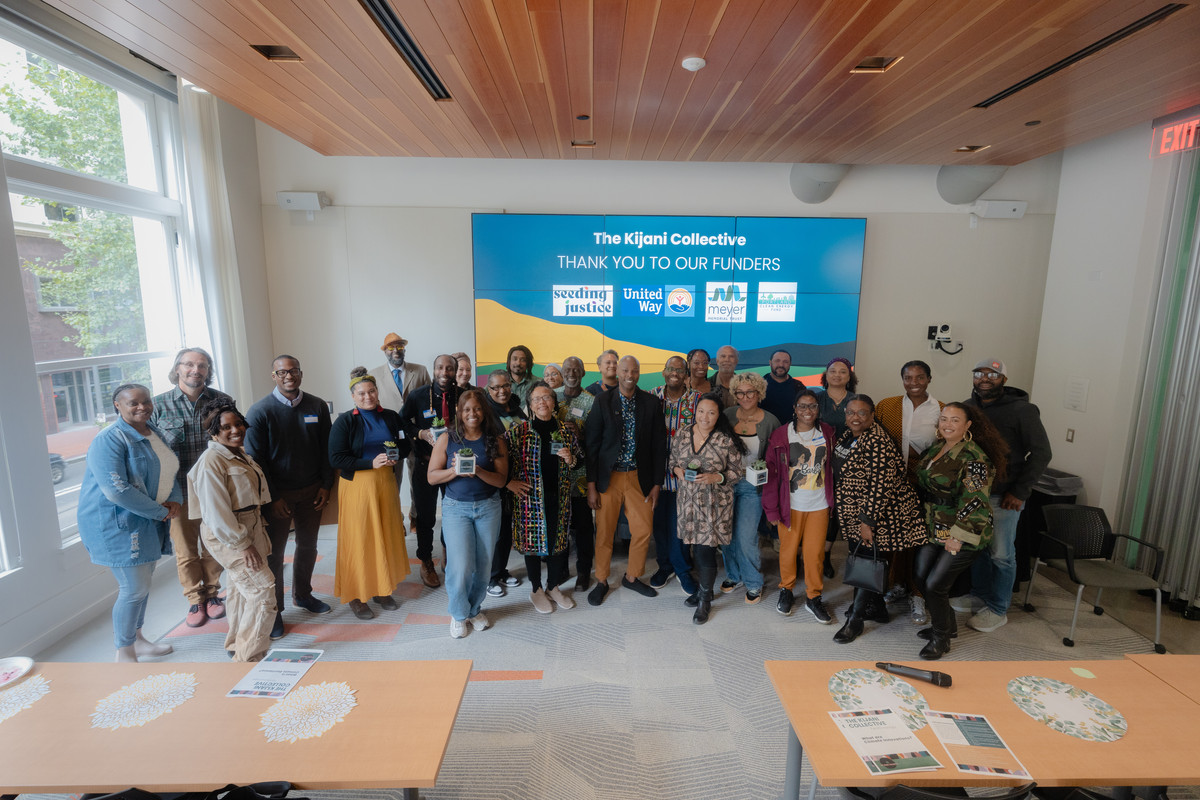
Kijani Collective community members gathered at Brunch and Launch in Portland
Kijani Collective · Brunch and Launch · Photo: Jamon Jordan · Source
The Purpose of Connected Work

Stronger organizations can fulfill their missions, contribute together, and expand opportunity for innovation entrepreneurs and communities across Oregon.

Total Proposed 2027 Investment$250,000

Strengthen the value of Lemelson’s existing grantee portfolio through coordinated capacity and ecosystem support.

The five core organizations’ existing 2027 grants remain separate. An indicative category allocation is shown below.

Guidance & Organizational Capacity

Canvas facilitation, inclusive ecosystem guidance, frameworks, learning, and tailored core support. My professional fee includes my travel and accommodations.

Shared-Resource Contractor(s)

A useful function selected and tested by the core cohort.

Collaborative Project Expenses

Resources to deliver bounded ecosystem projects and document their value.

Organizational Participation Stipends

$5,000 per core organization and $2,000 per regional organization for preparation, meetings, collaboration, and reporting.

Participant Travel & Convening

Participant travel, accommodations, and convening costs for cohort meetings and agreed project work.

Indicative 2027 Allocation

Indicative Allocation of the $250,000 Investment
CategoryShareAmount
Professional Fee — Fay Horwitt60%$150,000
Organizational Participation Stipends14%$35,000
Other Shared-Resource Contractor(s)14%$35,000
Shared Ecosystem Impact Project Expenses10%$25,000
Participant Travel & Convening2%$5,000
Total100%$250,000

Indicative planning allocation, to refine with Lemelson and participants before award. Categories may shift together within the fixed $250,000 total. Participation stipends are $5,000 for each of five core organizations ($25,000 total) and $2,000 for each of five Rogue Valley organizations ($10,000 total), supporting preparation, meetings, collaboration, and reporting. Professional delivery, including tailored core capacity support, is funded through the professional fee and shared-resource contractor support. My professional fee includes my travel and accommodations. Participant Travel & Convening covers participant travel, accommodations, and convening costs. The core organizations’ existing 2027 grants remain separate. The overall 2028 budget would be proposed in October 2027, based on progress and the agreed metrics; my professional fee may decrease with the projected lighter level of support.

Value for the Foundation

Better Use of the Portfolio

Organizations fulfill their missions and use complementary strengths.

Clearer Evidence of Value

Follow contributions into use and observe who benefits.

A Credible Path to Continuity

Identify useful functions, local stewards, costs, and aligned funding.

Five Reporting Areas.
One Focused Review.

Agree feasible evidence for these five areas at each cohort’s workshop: core in December, Rogue Valley in January. Use existing records and brief participant reflection, with each cohort’s scope and project shaping what is measured.

01 · Contribution Use

Into Everyday Use

Are agreed contributions becoming useful shared work?

What We Track

Report verified contributions used or completed as a share of agreed contributions due. Keep proposed, agreed, used, and completed distinct; show contribution type, scale, and beneficiaries.

02 · Organizational Value

Worth the Effort

Are organizations gaining benefits that justify participation?

What We Track

Report the number and share of responding organizations describing a concrete priority benefit worth their participation effort. Pair brief feedback with an example of use or mission benefit, participation costs, and response coverage. Interpret each cohort against the support it receives.

03 · Entrepreneur Progress

Useful Next Steps

Are innovation entrepreneurs completing the next steps the project aims to improve?

What We Track

Track unique innovation entrepreneurs completing a project-defined handoff or milestone. Where a rate is meaningful, report completions against followed-up entrepreneurs with that step due, alongside follow-up coverage. Track suitable capital received when relevant.

04 · Decision Influence

Meaningful Authority

Who actually shapes priorities and resource decisions?

What We Track

Use the Decision influence field in the Canvas’s Ecosystem Impact section to compare actual priority-setting, approval, and resource-allocation authority at baseline and review, including rural and culturally specific organizations. Verify changes with shared decision records and brief participant confirmation; attendance alone is insufficient.

05 · Funded Continuity

Stewards with Support

Can useful shared functions continue with paid stewardship?

What We Track

Report secured funding allocated to the next 12 months of agreed continuing functions as a share of their cost. Show named stewards, funding terms, and uncovered costs. If costs are not established, record that gap before calculating coverage.

Proposed quarterly scorecard, to confirm with participants and Lemelson. Set baselines and targets before delivery. Show response coverage, cohort differences, and measures not yet due or unavailable.

Supporting Formulas and Optional Measures

Each cohort may select 3–5 optional measures in total across its agreed priorities and project, with fewer where useful. Cap the selection at five per cohort, alongside the five reporting areas. Agree each measure’s purpose, baseline, data source, and owner; replace a measure when priorities change rather than adding to the set.

Contribution Activation (%) = verified contributions used or completed ÷ agreed contributions due × 100. Keep type, scale, and beneficiaries visible.

Net Staff Capacity Released = documented time saved − additional coordination time. Track capabilities adopted and mission benefits alongside time; distinguish measured results from estimates.

Resource Contributions and Capital Flows

Descriptive Resource Reporting
Resource TypeWhat We ReportEvidence and Context
Cash for Organizations and Shared WorkSource, purpose, recipient, and amount committed and received, reported separately.Grant or payment records; identify what is additional to this investment and existing 2027 grants.
In-Kind ResourcesHours, assets, or services actually used, by whom, for what purpose, and with what benefit.Use records and participant confirmation; show any estimated value and its method separately.
Capital for EntrepreneursCapital type, terms, recipients, and amounts committed and received, reported separately.Verified capital-provider or entrepreneur records; distinguish entrepreneur capital from organizational funding.
Expertise, Relationships, and Shared AssetsContributions entering use, completed handoffs, beneficiaries, and practical results.Contribution and referral records plus participant feedback; keep nonfinancial contributions in their own units.

Report each resource type separately, with source, period, beneficiaries, and evidence. Separate commitments from receipts and actual use; identify existing resources and avoid duplicate counting. Review decision-influence changes in the Canvas alongside these resource flows.

Shared Ecosystem Goal Progress Score = 100 × Σ(wᵢ × pᵢ). Agreed goal weights sum to one; verified progress runs from baseline toward target, bounded from zero to one and reversed for lower-is-better measures. Agree weights, targets, and evidence before delivery. Show underlying measures and missing data. This optional learning tool is not a validated ecosystem index or an organizational ranking.

Project Outcomes and Longer-Term Learning

The full Canvas guides the work; a focused five-area scorecard organizes the evidence. Fay deploys the surveys, collects reported organizational metrics, and analyzes and reports Ecosystem Impact at midyear and year-end. Findings inform ongoing updates to Cohort Capacity. Longer-term signals: follow business vitality, jobs, and ownership where evidence is available, alongside other influences.

Choose project-specific outcomes and compare who gains access, benefits, and influence across places and communities. Use the Canvas and existing contribution, project, and decision records as the primary review artifacts.

I deploy and analyze matched pre/post surveys and organizations' reported metrics, reporting Ecosystem Impact at midyear and year-end. Early core feedback informs continuing support; Rogue Valley establishes its baseline before Q2 project delivery. Findings guide updates to Cohort Capacity. See the Optional Measures and Draft Survey

Research-Informed Rationale

Evidence Behind the Components.
A Demonstration to Test the Combination.

Prior Oregon work and the Pando Way framework inform the design. Research supports the components and rationale; the exact Canvas and their combination have not been independently validated.

01
Bridgespan · 2009

Fund the Capacity that Mission Delivery Requires

The Nonprofit Starvation Cycle describes how unrealistic overhead expectations and pressure to conform can reinforce underinvestment and underreporting of operating costs. It supports paying for realistic capacity and coordination. It does not establish the effect of this Oregon pilot or a general mission-creep rate.

The Nonprofit Starvation Cycle
02
Center for Effective Philanthropy · 2018

Let Grantees Define Needs and Name Strain Honestly

Strengthening Grantees surveyed 170 nonprofit CEOs and 187 foundation leaders. It found gaps between funder perceptions and nonprofit needs, and concerns that disclosing needs could signal weakness or affect future funding. This supports participant-defined capacity priorities and realistic mission boundaries.

Strengthening Grantees
03
Center for Effective Philanthropy · 2013

Put a Foundation’s Wider Resources into Use

In Nonprofit Challenges, 52% of nonprofit leaders thought funders understood their challenges; 36% thought funders shared knowledge of nonprofits addressing similar needs. The study supports making knowledge, expertise and relationships useful alongside dollars. These historical findings are not estimates of current Oregon conditions.

Nonprofit Challenges
04
Detroit / New Economy Initiative · 2024 and 2016

Connect Ecosystem Engagement to Practical Outcomes

A 2024 study of 1,235 respondents associated stronger support-ecosystem engagement with better resource navigation. A commissioned 2016 PwC analysis modeled $1.9 billion in cumulative regional real GDP associated with supported-company activity in 2008–2015. Multiple funding sources and modeling assumptions make this a case and measurement precedent, rather than causal grant ROI or an Oregon forecast.

Detroit Resource-Access Study Economic Analysis
05
Bridgespan · 2016

Pay for the Actual Cost of Delivery

Pay What It Takes examined financial records from 20 high-performing nonprofits and found wide variation in indirect costs. This supports realistic staffing, infrastructure, and coordination budgets. It does not establish a universal overhead rate or a guaranteed return from shared contractors.

Pay What It Takes
06
Center for Effective Philanthropy · 2026

Reduce Practical Capacity Pressures

State of Nonprofits 2026 reports financial-stability concerns among 66% of nonprofit CEOs and serious concern about their own burnout among 46%. These national findings support practical assistance and manageable participation; they do not diagnose the Oregon cohort.

State of Nonprofits 2026
07
Center for Effective Philanthropy · 2024

Let Organizations Set Capacity Priorities

Breaking the Mold's three-year study documents sustained recipient-reported benefits from large unrestricted gifts. It supports flexible, organization-defined priorities while differing substantially in funding scale from this pilot.

Breaking the Mold
08
ORS Impact / Spark Policy Institute · 2018

Resource Shared Work and Adaptive Learning

A cross-site study of 25 collective impact initiatives examined how coordination, shared direction, and an equity approach contribute to systems and population changes alongside other conditions. It supports testing collaborative infrastructure; it does not prove this proposal's particular design.

When Collective Impact Has an Impact
09
Ben Franklin Technology Partners · 2023

Assess Innovation Infrastructure over Time

The 2017–2021 evaluation estimated a $6.1 billion increase in Pennsylvania's economy and $400 million in state tax receipts associated with a mature investment-and-support program. Its scale, duration, and model provide an evaluation precedent, rather than a return multiplier for Oregon.

Economic Evaluation
Oregon Evidence and Design Context

The current Learning & Narrative Dashboard brings together five organizational discovery conversations, the Rogue Valley account, synthesis, and the OCIE crosswalk. The following supplied materials document the earlier work informing this proposal.

  • WayBuilders Policy Insight Memo — October 17 DraftOctober 2025 · Policy alignment, capital pathways, and inclusive climate and invention growth.
  • Oregon Innovation & Invention Ecosystem Flywheel2025 planning context · Aligned workstreams for ecosystem infrastructure, activation, and funder stewardship.
  • OCIE Initial Research Findings Feedback SessionAugust 13, 2025 · Participant feedback on research findings, strengths, gaps, and community priorities.
  • Le’kiesha French — Discovery Framework & Opportunity MappingSeptember 8, 2025 · Relational discovery, overlooked contributors, cultural insight, and community assets.
  • Anchor Funder & Engagement Strategy RecommendationSeptember 19, 2025 · Shared funding and stewardship of ecosystem infrastructure.
  • Oregon Innovation Hubs Engagement Strategy RecommendationSeptember 19, 2025 · Locally shaped priorities connected to statewide expertise, projects, and resources.
  • The Pando Way — Framework OverviewApplied framework reference · Organizational and relational infrastructure, shared portfolios, adaptive learning, and ecosystem outcomes.
  • Innovation Ecosystem Strategy MeetingOctober 20, 2025 · Prior discussion of inclusion, relationships, grantmaking, and ecosystem strategy.
  • Strategic Planning SessionOctober 20, 2025 · Prior discussion of foundation relationships and future ecosystem-building direction.

These 2025 materials provide historical recommendations, an applied framework, and planning context. Current priorities and commitments are developed with participants and Lemelson; the policy memo’s federal-program descriptions reflect its October 2025 draft date.

Diverse entrepreneurs creating together across Oregon urban neighborhoods, modern invention spaces, and rural communities
What Becomes Possible

More People.
More Places.
More Possibility.

Organizations can deliver their own work and open useful pathways for innovation entrepreneurs across Oregon. Urban, rural, and culturally specific communities help shape opportunity and share in its influence and value.

De-emphasize Portland as the default center of innovation activity, recognize backbone contributions wherever they are located, and broaden the geographic and demographic distribution of opportunity and decision-making power.

Review the Full Proposal Explore the Learning Dashboard