WayBuilders × Oregon I&E
Current Proposal

2026 Living Learning Surface

OR Innovation Ecosystem Learning & Narrative Dashboard

A current view of five organizational capacity-building relationships, regional work, and the wider Oregon innovation ecosystem—what people need, what is getting in the way, and where coordinated action may matter most.

5Oregon Organizations in the Leadership Cohort
5Organizational Discovery Profiles Completed
1Rogue Valley Regional Capacity Track Underway
June 2027Innovation-Hub Funding Transition to Prepare for Now

Engagement map · internal Lemelson view. Explore documented initiative contacts and relevant federal and philanthropic context. This is a working record of engagement, not a public directory of Oregon’s ecosystem.

What Is Becoming Visible

Current Learning

The five leadership conversations are complete. These are a first cross-cohort reading, with regional testing and shared decisions still ahead.

Five Interviews Complete · Strong Cross-Cohort Signal

Statewide Ambition Depends on the Operating Capacity of the Organizations and Local Partners Carrying It.

All five leaders described ways to help founders and regions advance, alongside constraints in staffing, revenue, operations, or leadership time. Cara’s OEN account adds an important distinction: statewide expertise can strengthen locally led work, but the backbone itself needs funded administration, a clear story, and practical measures.

Operating CoreProgram reach is outpacing flexible staff and systems.
Distinctive LanesEach organization brings a different part of the founder journey.
Local OwnershipStatewide support works best through trusted regional leaders.
Contribution, Not AttributionMeasure handoffs and progress without claiming an entire economy’s results.
Confirmed in Two RAIN Conversations

Sector Focus Is Replacing a Purely Place-Embedded Model.

RAIN’s creative-sector accelerator exceeded its two-year participation estimate in roughly seven months. Agriculture/ag-tech, natural resources, and energy are next.

Demand ValidatedStatewide Reach
Emerging Across Both Tracks

Navigation Is a Relationship Function—Not a Directory.

Leaders repeatedly distinguish a list of resources from a trusted person who understands fit, makes the handoff, and stays connected to the entrepreneur’s journey.

Referral QualityWarm Handoffs
New Organizational Signal

Founder Support May Stop Just Before the Market Moves.

Juan described a last-mile gap before a pilot or major customer. Leo (Lee) Ochoa adds the physical-product middle: founders with prototypes need manufacturing costs, supply-chain plans, testing, and demonstrations before many investors or buyers can act.

CommercializationPilots + Buyers
System Risk

A Funding Cliff Could Erase Connective Capacity Before a Successor Model Exists.

Kim reports that Southern Oregon Innovation Hub funding ends June 30, 2027, putting its navigation, coordination, and rural programming at risk. Launch Pad has a separate volunteer-dependent operating gap. RAIN also reports a possible shift in Ford Family Foundation support for rural economic development; its effects remain to be established.

Needs ActionRural Continuity
Across Five Organization Profiles

Collaboration Needs Role Clarity, Incentives, and Paid Capacity.

Rachel called for neutral facilitation; Juan wants funded roles; Lee wants a defined pilot; Derron asks for explicit norms and autonomy. Cara wants jointly funded work that names each partner’s strongest function and tests whether back-office capacity can be shared.

Leader CohortFounder Journey
OEN Discovery · Oct 5

Local Partners Can Lead While Statewide Infrastructure Helps Them Move Further.

Cara reports that regional organizations now drive most of the local work while OEN provides innovation-specific expertise, reusable designs, connections, and a statewide signal of credibility. Its new SBIR/STTR assistance role and angel network could widen the capital pathway if the administrative core and local handoffs keep pace.

Distributed DeliveryCapital Access
Kijani Discovery · Sep 30

Climate Resilience Can Create a Local Market for Black-Owned Businesses.

Derron described a planned network of Black-owned community spaces for emergency resilience, with Black contractors assessing and improving facilities, maintaining them, and offering solutions to households. The business support, policy, data, and trust infrastructure must grow together.

Community OwnershipResilience + Enterprise
VertueLab Discovery · Sep 28

Oregon’s Climate Commercialization Work Needs People and a Clearer Path to Funders.

Lee described a small team rebuilding its Oregon presence, a planned mass-timber program, and a need for senior fund development, communications, and program capacity. He wants climate outcomes linked to near-term jobs, housing, mobility, and donor priorities.

Organizational CapacityClimate Transition
Emerging Funding Gap

Rural Innovation Needs a Funding Lens of Its Own.

Rural does not mean homogeneous. It means designing for distance, thin institutional capacity, diverse communities, non-venture pathways, and local decision-making—conditions that broad statewide or urban-centered funding often misses.

Rural ContinuityPlace-Aware Funding
Funding Landscape Shift · Direct Grantee Signal

A Rural Funding Gap May Be Opening as the Ford Family Foundation Changes Direction.

Rachel reported that, as a current grantee, RAIN was briefed that the Foundation is shifting toward children and families. The choice is understandable—and strong rural economies also shape family well-being—but a narrower grantmaking focus could leave entrepreneurship and community economic-development infrastructure without one of its few long-term, rural-aware funders.

A
Longstanding rural roleCommunity capacity, economic development, local enterprise, and place-based institutions.
Reported priority shiftToward children and families
B
Potentially thinner supportFor the organizations, connectors, and patient infrastructure that help rural entrepreneurs start and grow.

What Could Be Left Exposed

Rural Entrepreneur SupportCommunity Economic DevelopmentEcosystem CoordinationSmall-Organization CapacityLong-Term Local Wealth Building
Evidence maturity: direct report from a current grantee, September 21. The scope, timing, and grant-level implications of the shift still need to be clarified as the Foundation’s direction becomes public.
How the Dashboard Grows

From Conversation to Action

Every new conversation enters the same learning cycle so evidence remains traceable and insights can strengthen—or change.

1. ListenCapture priorities, pressures, lived examples, and language.
2. Code SignalsTag assets, needs, gaps, risks, opportunities, and relationships.
3. CompareSeparate organization-specific and region-specific issues from wider patterns.
4. Make MeaningUpdate findings, stories, implications, and confidence levels.
5. Act & LearnShape support, test collaborative moves, and capture what changes.
Organizational Capacity-Building Track

Five Organizations

Each profile combines direct discovery, capacity needs, ecosystem role, and actionable support priorities. All five leadership conversations are now complete.

Profile 01 · Active

RAIN Catalysts

RAIN is redesigning how it serves rural entrepreneurs while confronting a near-term funding and leadership-capacity challenge. Its emerging role reaches beyond programming: rural representation, human navigation, and pathways for entrepreneurs who do not fit the venture-capital mold.

Rural OregonInnovation + Entrepreneurship2 Conversations
Raincatalysts.Org ↗
Strategic Shift

From Hyper-Local Generalist Support…

Community-embedded staff helped RAIN reach entrepreneurs, but post-pandemic engagement patterns and repeated local audiences have reduced the model’s reach and efficiency.

…To Rural, Sector-Specific Delivery.

RAIN is pairing statewide virtual accelerators with one-on-one technical assistance and selective local workshops in creative industries, ag/ag-tech, natural resources, and energy.

Validation Signal
100+

Creative-Sector Participants in About Seven Months

RAIN expected roughly 100 across the full two-year grant period. The response suggests that visible sector identity helps entrepreneurs recognize that a program is for them.

Innovation-Program Risk

Innovation-Hub Funding Is Essential to Sustaining Rain’s Innovation Function.

Rachel said that without continued hub funding, RAIN may be unable to sustain the innovation-specific programming it has delivered as an Innovation Hub. The risk is not existential to RAIN itself, but to this body of work, which might ultimately need to move elsewhere or be discontinued.

High ConsequenceJune 2027
Capacity Need

A Redesigned Team Is Only Partly Funded.

  • Director of AcceleratorsFunded at approximately half-time; responsible for program structure and delivery.
  • Director of InnovationFunded; intended to hold hub work and entrepreneur technical assistance.
  • Director of NetworksNeeded, but Rachel is currently holding the work.
Executive Capacity

Rachel Needs to Move from Task Load to Strategic Leverage.

  • What consumes time nowGrant writing, contractor management, communications, and network-building.
  • Highest-value future roleBig-picture strategy, funder relationships, partnerships, and leadership of a more independent team.
  • Immediate reliefDevelopment and communications support that tees up opportunities, writing, and follow-through.
Distinctive Ecosystem Role

Rural Voice

Represent the realities of entrepreneurs and support organizations outside Portland without using a combative posture.

Human Navigator

Make fit-aware referrals and warm handoffs; help entrepreneurs move through a fragmented field.

Alternative Pathways

Serve real-economy companies building through revenue, debt, or patient growth—not only pitch and venture pathways.

“There’s a critical mass of entrepreneurs who are not being served by the powers that be.”

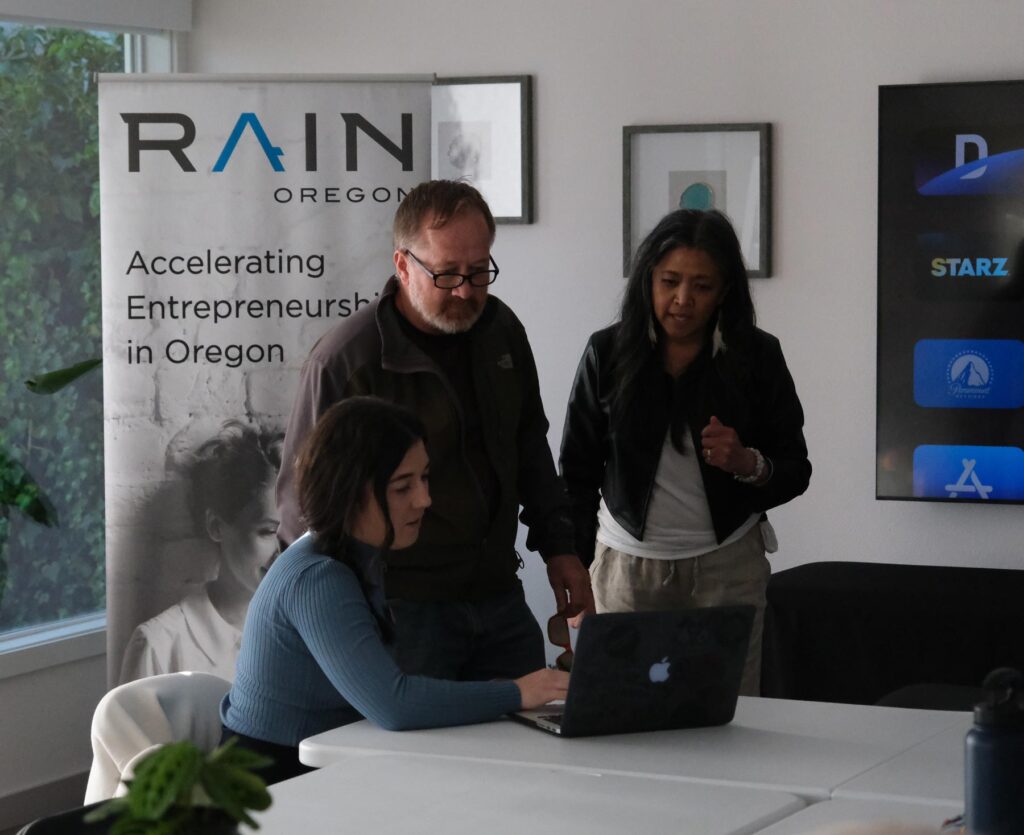
Rachel Jagoda Brunette · September 21 discovery call RAIN advisors gathered around a laptop during an entrepreneurship support session
Near-Term Support Priorities
  1. 1 · Development capacityBuild a sector-funder pipeline, open doors, and add grant-writing support.
  2. 2 · Communications capacityMake RAIN’s role, results, and referral pathways easier for partners and entrepreneurs to see.
  3. 3 · Accelerator qualityIdentify curriculum and subject-matter partners for three new sector programs.
  4. 4 · Continuity strategyDevelop scenarios for the June 2027 hub transition before funding decisions force the outcome.
Collective Design Insight

Start with the Five Leaders, Establish Shared Goals and Values, and Make Each Organization’s Lane Visible.

Rachel’s recommendation is a highly facilitated, leader-level process—not a staff-wide network at the outset and not a structure led by one of the five organizations. A credible collective should make clear that everyone is building shared value, not feeding another organization’s success.

Reported Funder Shift · Direct Source

Ford’s Change in Emphasis Could Compound Rain’s Continuity Risk.

Rachel said RAIN was briefed by a Ford Family Foundation program officer that the Foundation is shifting toward children and families. The precise effect on current economic-development and entrepreneurship grantmaking is not yet clear. But if that support contracts, RAIN and peer rural organizations may lose one of the few funders that understands the long horizon, local relationships, and organizational capacity required to build rural economies.

Rural Funding GapScope + Timing to Verify

Profile 02 · Discovery Conversation · September 30, 2026

Kijani Collective

Kijani Collective links community-led research, climate resilience, policy advocacy, Black-owned enterprise, and public voice. Derron Coles described an informed-action cycle: listen and gather evidence with community members, then build initiatives that help Black communities prepare, own assets, and shape decisions.

Portland MetroBlack-Led ResilienceCommunity Research → ActionCollective Ownership
Kijanicollective.Org ↗
Direct Discovery · Derron Coles

Put Black Community Resilience, Economic Ownership, and Practical Climate Solutions in One System.

Kijani began with two years of community gatherings and a policy focus. Its scope has grown to include a planned network of Black-owned resilience spaces, a Black circular economy rooted in high-quality local businesses, policy advocacy, and community education and voice. Derron argues that climate work should engage businesses across sectors, not only STEM or green startups. The enlarged scope has not brought a matching operating budget.

Research-Led ActionBlack-Owned AssetsMultisector Climate Work
Most Promising Initiative · In Development

Community Spaces as Resilience Hubs and Local Demand Anchors

A survey and planned focus groups are examining emergency readiness and needed services. Kijani is engaging Black-owned faith and community spaces about the roles they could play, then envisions facility assessments, upgrades, an online map of available support during events such as poor air quality, and work for Black contractors who can install and maintain solutions. These are design and partnership steps, not a completed hub network.

Interlocking Workstreams

Policy, Business Quality, Data, and Public Voice Reinforce the Hubs.

Kijani already trains community members in policy advocacy and wants an ongoing alumni community with timely opportunities. Its planned business pathway depends on trusted accelerators helping Black-owned firms meet quality standards, while community and environmental data guide decisions. A communications committee shares climate solutions and invites residents into the work. Derron identified the business-support partnership as the most vulnerable link today.

Capacity and Governance Pressure

The Organization Grew Beyond Its Original Policy Budget, and Too Much Still Runs Through Derron.

Derron described five paid project managers and a six-person steering committee whose members can also be paid for project work. Kijani aims for a flatter structure, but he currently handles strategy, project decisions, grant writing, and external relationships. That creates a bottleneck and can make proximity to him appear to determine whose work advances. He wants an executive or operations lead to coordinate managers and processes, plus a revenue-development and relationship-building lead so he can contribute at the strategic level.

Funding Model · Leader-Reported

Move from Small Grants to a Funded Portfolio of Connected Work.

Derron reports losses in federal and related state support and more competition for remaining grants. He is organizing a Black prosperity plan by focus area, inviting independent organizations to align their initiatives and seek larger, multi-year commitments together. A roughly $3 million, two-year focus-area investment was his illustrative ask to a funder, not a secured grant or a finalized campaign target. He has begun one-on-one partner conversations in the education area.

Tools with a Real Operating Cost

Use Digital Systems When They Save Scarce Contractor Time.

Policy scanning, project coordination, research and surveys, and eventually a public resilience map all need dependable data practices. Derron said he resists recurring software subscriptions unless a tool is used and necessary; he cited a policy platform costing about $10,000 a year. The useful test is whether a tool reduces repeat work, keeps distributed contributors aligned, and can be sustained after a pilot.

Shared goals and clear rules could let each organization keep its own work while contributing to something larger.

Paraphrase of Derron’s September 30 discovery conversation
Near-Term Support Priorities
  1. 1 · Operating leadershipCost and define an executive or operations lead who can coordinate the five project managers and make decision rights transparent.
  2. 2 · Revenue and relationshipsResource grant strategy, larger funder relationships, and outward-facing partnership development beyond Derron’s own time.
  3. 3 · Business-support allianceRepair trust and agree on roles with accelerators and Black-owned contractors needed for the resilience economy.
  4. 4 · Selective digital capacityPrioritize tools for research, policy scanning, distributed coordination, and mapping against actual use and recurring cost.
Distinctive Cohort Contribution · Conditions for Participation

Bring Community-Centered Analysis and an Explicit Collective Agreement.

Derron’s engineering, teaching, and systems experience shape Kijani’s ability to interpret community data and design inclusive processes. He proposes that partners set shared norms and goals, name which organization holds each workstream, and draw on one another’s expertise without surrendering autonomy. He can contribute analysis and process design, but says Kijani needs enough internal leadership capacity to free him from constant operational problem-solving. Its work is now centered in Portland metro; he hopes eventually to connect with locally adapted Black-led efforts in Southern and Eastern Oregon, rather than transplant a Portland model. Those regional relationships remain aspirational.

Profile 03 · Active

Latino Founders

Latino Founders is entering a growth-and-stabilization phase: expanding from accelerator programming and a physical founder community into sector-specific pathways that help scaling companies reach expertise, capital, pilots, and institutional customers. A larger Portland facility and a growing regional pipeline increase both its opportunity and its operating demand.

Portland + Multistate ReachScale-Stage FoundersCulturally Specific Support1 Discovery Conversation
Latinofounder.Com ↗
Growth Strategy

From Proving a Culturally Specific Accelerator Model…

Latino Founders formalized as a nonprofit during the past three years, served more than 80 entrepreneurs in its former 3,000-square-foot space, and built Pitch Latino into an organic founder pipeline that now reaches beyond Oregon.

…To Building Sector Pathways Through Market Adoption.

The organization is maturing its climate accelerator and plans focused pathways in software/AI, consumer packaged goods, athletic and outdoor products, health, and climate—sectors supported by founder demand and Oregon’s economic priorities.

Program Asset
$200K

In Direct Funding Distributed Through the Current Climate Accelerator

The model combines education, mentors, direct support, and capital. The next design challenge is converting that preparation into pilots, deployment, and early market adoption.

Last-Mile Gap

Founders Need a First Consequential Customer—Not Only Another Program.

Juan sees the greatest gap after acceleration: a pilot, institutional buyer, enterprise purchase order, or deployment partner that validates the company and signals readiness to the wider market.

Pilot PathwaysProcurement
Organizational Capacity

The Permanent Team Needs 1.5 Additional Roles and a Two-Year Runway.

  • Director of Innovation & EntrepreneurshipOwn program and vertical development, connect founders to technical expertise, and release Juan from day-to-day program design.
  • Full-time community managementExpand the current part-time role to operate the new four-story facility and sustain founder engagement.
  • Flexible specialist benchContinue using mentors and entrepreneurs-in-residence as contractors aligned to each vertical.
Executive Capacity

Juan Needs Trusted Challenge, Perspective, and Room to Lead.

  • Immediate reliefShift program development to a dedicated director so Juan can focus on partnerships, capital, institutional buyers, and strategic decisions.
  • Leadership supportA trusted peer or advisor who can pressure-test decisions, surface blind spots, and reduce the isolation of holding high-stakes choices alone.
  • Succession readinessDevelop the younger team through board exposure, cross-training, conferences, and deeper professional learning.
Ecosystem Gaps

Market Adoption

Accelerators prepare founders, but few actors own the path to pilots, procurement, and a first major customer.

Early Patient Capital

The first $10,000–$20,000 is increasingly scarce, especially for consumer products, deep tech, and other capital-intensive companies outside software.

Power at the Design Table

Culturally specific organizations are often invited into major proposals as collaborators without a funded role or meaningful authority over the design.

Distinctive Ecosystem Role

Trusted Pipeline

Pitch Latino, events, outreach, and partner referrals surface growth-ready founders in Oregon and beyond.

Scale-Stage Specialization

Latino Founders concentrates where companies have traction and need the team, expertise, capital, and market connections to grow.

Coalition Participation

The organization joins larger sector initiatives while pushing for culturally specific leaders to help shape—and be funded within—the work.

“We need to support the journey of the entrepreneur—not our journey.”

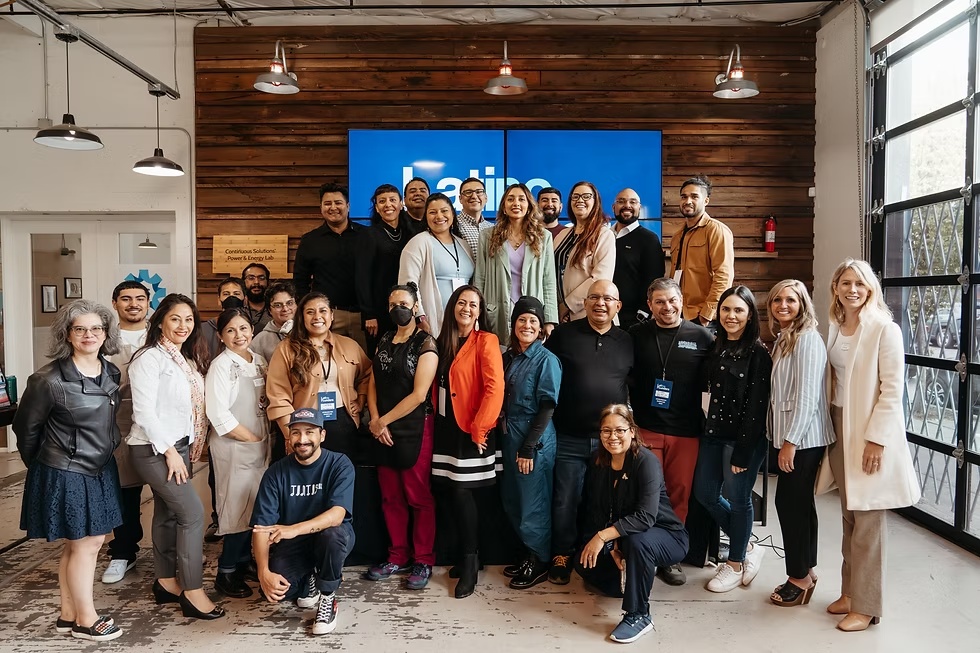
Juan Barraza · September 25 discovery call Latino Founders community members gathered together at an entrepreneurship event
Near-Term Support Priorities
  1. 1 · Staffing runwayResource the innovation director and full-time community-management roles for at least two years.
  2. 2 · Buyer and pilot networkOpen institutional, corporate, and public-sector pathways that can become meaningful early customers.
  3. 3 · Mentor and expert benchRecruit experienced operators and technical specialists who can support the five growth verticals.
  4. 4 · Leadership developmentGive Juan a trusted advisory relationship and fund deeper learning for the emerging team.
Collective Design Insight

Organize the Five Organizations Around the Founder Journey—and Fund Each Organization’s Strongest Lane.

Juan supports beginning with the five leaders if the process is candid about strengths, gaps, and underperformance. His preferred model combines multi-year operating and program support, tangible milestones, clear handoffs, and incentives to work as a coalition rather than asking every organization to cover every stage.

Profile 04 · Discovery Conversation · September 28, 2026

VertueLab

A Pacific Northwest climate innovation organization combining investment, founder support, and partnerships. Managing Director Leo (Lee) Ochoa is rebuilding its Oregon presence around locally relevant climate commercialization and stronger referral pathways.

Oregon + Pacific NorthwestClimate TechnologyPrototype → DemonstrationLed by Aina Abiodun
VertueLab.Org ↗
Direct Discovery · Leo (Lee) Ochoa

Build an Oregon Climate Pathway that Reflects Oregon’s Places and Industries.

After helping develop a Seattle climate innovation hub, Lee wants a meaningful Oregon presence rather than a copied model. His near-term focus is Portland and Vancouver, Washington, with broader Oregon relationships built through local partners. He described TerraForge, a planned mass-timber program with nine months of curriculum and three months of field work and mentorship, aiming for a first cohort in early 2027 and a learning-informed second cohort in 2028. Timing and staffing depend on funding.

Oregon StrategyPlanned TerraForge CohortLocal Co-Design
Distinctive Ecosystem Role

Between a Working Prototype and a Credible Market Demonstration

Lee sees a gap after early ideation and prototyping: physical-product founders still need realistic manufacturing costs, supply-chain and site choices, technology testing, pilot partners, and evidence investors or customers can trust. VertueLab can help connect that preparation with capital and climate deployment, especially for founders whose pathways are underserved.

Team and Funding Capacity

Strategy, Delivery, and Fundraising Each Need a Person.

Joy Ren already manages technical grant writing, applications, and tracking. Lee’s highest near-term need is a more senior fund development and communications role to shape Oregon positioning, donor relationships, and outcome metrics. TerraForge also needs delivery capacity: a planned part-time program manager through June, with a possible full-time director around mid-2027 if a pending grant and other funding materialize. These are prospective roles, not staffed commitments.

Funding Story and Measurable Value

Translate the Climate Mission into Outcomes that Funders and Communities Can See.

Lee said federal climate and equity funding has become less viable for VertueLab, increasing reliance on philanthropy and private support. With donors facing competing priorities, he wants clearer near-term evidence—jobs, middle housing, urban mobility, and students moving toward employment—alongside long-term climate outcomes. Funder metrics should inform program design early, rather than be assembled only for a later grant report.

Relationships to Strengthen

Make VertueLab’s Lane Legible to Oregon Partners.

Lee has visited about half the regional hubs and wants deeper links with Centers of Innovation Excellence, fabrication and testing facilities, and Southern and Eastern Oregon connectors. OEN’s reverse pitches helped create introductions. He sees OEN and Latino Founders as potential adjacent referral partners, with complementary roles across the founder journey.

Possible Regional Bridge · Exploration Only

Test a Paid Southern Oregon Partnership.

Fay raised the idea of a funded local connector, potentially through Kim Freeze’s SOREDI-linked Hub and Launch Pad relationships, to help VertueLab learn the region and connect climate founders to relevant production and pilot assets. Lee was interested in exploring it. No partnership, scope, budget, or referral pathway was agreed.

A concrete pilot can teach the network more than another round of meetings.

Paraphrase of Lee’s September 28 discovery conversation Five VertueLab colleagues seated together in conversation
Near-Term Support Priorities
  1. 1 · Strategic development and communicationsBuild senior fundraising strategy, donor relationships, positioning, and impact measures over the next 90 days.
  2. 2 · Program delivery runwayFund and retain the people who can launch, manage, and learn from TerraForge if the grant and plan proceed.
  3. 3 · Oregon referral networkClarify handoffs among hubs, CIEs, physical-product facilities, founder programs, pilots, and investors.
  4. 4 · Test a bounded collaborationExplore a funded regional connector or a one- to two-year shared development and communications bridge with willing partners.
Leadership and Collective Design

Start with a Small, Real Handoff and Learn Through Doing.

Lee brings experience as a designer, inventor, and physical-product founder who navigated patents, preorders, manufacturing, and supply-chain disruption. His immigrant and Hood River experience also informs his attention to trust and place. For the cohort, he wants clearer roles, closed-loop referrals and data, and an actionable pilot that helps more entrepreneurs of color launch technologies in Oregon and attracts more climate funding. The pilot and its measures remain to be designed with partners.

Profile 05 · Direct Discovery

Oregon Entrepreneurs Network

OEN is growing from a founder network into a statewide connector for innovation-based companies, regional partners, and capital. Cara sees an opportunity to provide shared investment and program infrastructure while local organizations own delivery—if OEN can strengthen the operations, story, and measurement behind that reach.

Statewide + Local PartnersCapital PathwaysDiscovery · Oct 5
oen.Org ↗
Direct Discovery · Cara Turano · October 5, 2026

Statewide Reach Is Growing Faster than the Systems Beneath It.

Cara described three priorities: bring OEN’s newly awarded SBIR/STTR assistance program online, explore a statewide angel syndicate with regional deployment, and define useful measures of OEN’s contribution. She reported 724 unique founders served through August 2026 by a five-person team, 93 events in 2025, and a sixth employee beginning work on SBIR/STTR. These are leader-reported figures, not audited impact totals.

Sbir/Sttr LaunchRegional CapitalContribution Measures
Distinctive Ecosystem Role

A Statewide Resource Behind Local Leadership

Cara said local partners now drive most regional events and program design. OEN supplies innovation-specific language, content, templates, connections, and the credibility of a statewide partner—especially where innovation is not a host organization’s primary focus. A next step is helping one region teach another without making OEN the permanent local operator.

Capital Pathways

Link Non-Dilutive Funding to Local and Statewide Investment.

OEN is staffing a federal and Business Oregon-supported SBIR/STTR assistance role under an annually renewable agreement. Cara reported a 270-member angel network with 66% engaged and four OEN investments so far in 2026; a dedicated, time-limited resource helped grow it. In one Klamath Falls example, she said an OEN investment was followed by nearly $400,000 from local investors—an illustration to verify, not a general result. Angel Oregon’s Treasury-funded role ends in June, according to Cara; the renewal path needs confirmation. She wants to test a broader syndicate, including a Southern Oregon pilot, and stronger CDFI and lender relationships. Those are ambitions, not funded programs.

“We drive entrepreneurship. We contribute to economic impact.”

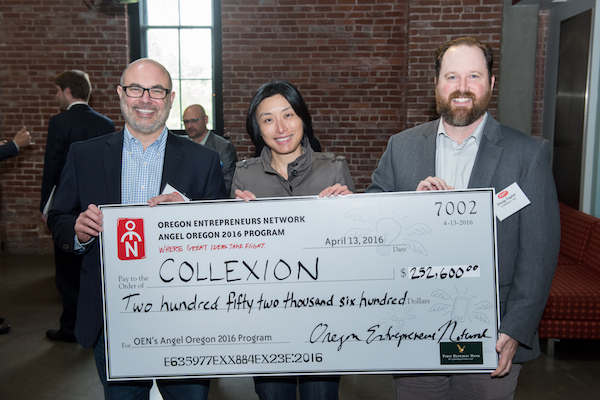
Cara Turano · October 5 discovery call Archive photo · Angel Oregon 2016 program Three Angel Oregon 2016 program participants holding a ceremonial investment check
Operating Capacity

Six People Are Carrying a Much Larger Organization with a Thin Administrative Core.

Cara expects a roughly $1.2 million 2026 budget, compared with about $250,000 when she started four years earlier. Staff roles center on events and marketing, membership and sponsorship, Angel Oregon, SBIR/STTR, and the Northwest Innovation Hub that OEN took on after its former host closed. The team relies on fractional bookkeeping and CFO support. Cara is personally handling HR policies, job descriptions, expense and grant-time systems, and much of the grant writing; she said grant administration caps make it difficult to pay for the systems and staff that growth requires.

Narrative and Revenue

OEN Amplifies Founders and Partners More Clearly than Its Own Contribution.

Cara reported nearly $350,000 in annual sponsorship and a recent return to operating in the black. But the staff identified OEN’s weak organizational narrative as a major threat: they tell members’ stories without showing how OEN enables the work. Her near-term capacity choice was organizational marketing alongside urgent administration; over the next year she would value a development or business-development lead so she can focus on strategy, policy, and regional partnerships.

Measurement and Attribution

Show How OEN Helps Founders Advance without Claiming the Whole Economy.

OEN’s first impact discussion drifted toward jobs and capital totals requiring expensive data or economist-level analysis. Cara’s more useful distinction is that OEN drives entrepreneurship and contributes to economic impact. Track founder progression, warm referrals, capital readiness, local partner capability, and what happened after a handoff; validate a feasible set against the strategic plan she offered to share.

Leadership and Collective Design

Share Infrastructure and Roles, with Clear Boundaries Around Convening.

Cara brings statewide relationship-building and a talent for aligning people around a shared vision. She also wants to learn from leaders who have scaled an organization’s systems while it grows; her heavy travel is energizing but unlikely to be sustainable indefinitely. OEN would welcome a genuinely co-funded collaboration that asks which organization is best at which function, what each can stop duplicating, and whether a shared bookkeeper or other back-office role could serve several partners. OEN already coordinates hubs and delivers programs; a cohort-wide convening role would need explicit neutrality and decision rules rather than being assumed.

Near-Term Support Priorities
  1. 1 · Stabilize the operating coreScope HR, bookkeeping, expense and grant-time tracking, and the administrative support needed for reliable reporting and growth.
  2. 2 · Tell OEN’s own storyBuild a concise organizational narrative and contribution measures alongside the founder and partner stories it already shares.
  3. 3 · Protect capital-program deliveryOnboard SBIR/STTR well, clarify Angel Oregon’s funding runway, and test the regional syndicate idea only with local partners and an investment vehicle that fits.
  4. 4 · Test shared capacityCompare back-office, development, communications, and peer scaling needs across the five organizations; cost a bounded, opt-in service before promising savings.

Regional Pilot · Active

Rogue Valley

The July Grants Pass gathering revealed a region rich in connectors and local commitment. An in-person meeting and a September phone meeting with Kim Freeze, together with her written account, show what that connective work takes day to day—and what the Southern Oregon Innovation Hub and Launch Pad Studio need to sustain it.

Grants PassSouthern OregonRegional Events + Two Kim Meetings
Kim Freeze

Regional Leader · In-Person + Phone Meetings

Kim Freeze

Southern Oregon Innovation Hub Director with SOREDI; founder of Launch Pad Studio. Kim describes herself as the “super glue” between founders, local organizations, statewide resources, and capital pathways.

  • Hub function: sustained founder mentorship, resource and capital navigation, rural programming, advocacy, and coordination among 60+ regional partners.
  • Launch Pad function: nonprofit incubator, licensed commercial kitchen, makers’ and food-business support, and workforce training—a physical route from idea to production and launch.
  • Capacity assessment: the two efforts reinforce one another but have distinct budgets, staffing needs, legal homes, and continuity risks. Assess each on its own terms before designing shared support.
70companies receiving technical assistance in Q3 2026
61companies receiving navigation support; 14 in-depth skills programs in Q3 2026
239referrals to Business Oregon and partners through Q3 2026
$1.95Mcapital reportedly secured by Hub-connected entrepreneurs in 2026

Kim also reports 4,032 total participants in networking programming through Q3 and weekly sustained mentorship for 5–10 entrepreneurs. These are leader-reported activity and outcome figures; referral counts, capital attribution, and unique participant totals warrant verification for external reporting.

Capacity Assessment · Two Connected Structures

What It Takes to Keep the Continuum Working

Separate the regional Hub’s coordination role from Launch Pad’s operating model, then identify the support they can share.

SOREDI: Southern Oregon Regional Economic Development, Inc.
Publicly Funded HubJune 30, 2027 Cliff

Southern Oregon Innovation Hub

Kim reports a full-time director and a half-time coordinator supporting mentorship, technical assistance, regional partner coordination, rural outreach, and capital navigation across Jackson and Josephine Counties, with wider regional connections.

  • Preserve the core roles.Cost the director, coordinator, and programming needed to keep relationships, referrals, and rural delivery intact after June 2027.
  • Extend reach and expertise.Resource travel and local programming; develop tech-sector mentors and groundwork for an early-stage investment network.
  • Make the function legible.Document founder journeys, partner handoffs, capital outcomes, and the value of the connector role beyond event volume.
The Launch Pad Studio frog crest
501(C)(3) NonprofitVolunteer Dependence

Launch Pad Studio

Kim describes an incubator and Oregon Department of Agriculture-licensed commercial kitchen for food producers, farmers, makers, tech and climate founders. It currently runs largely on her unpaid effort and a small volunteer group.

  • Stabilize operations.Price part-time staffing or contracts for kitchen scheduling, participant support, training, equipment, licensing, and maintenance.
  • Test a viable revenue mix.Assess kitchen occupancy, earned income, training and program support, and grants; full tenancy is a potential contribution, not yet a secured operating base.
  • Build the nonprofit.Strengthen governance, fundraising, financial management, rural outreach, and founder support without making Kim the sole backstop.
Shared capacity question

Which navigation, mentor, communications, fund development, and measurement functions should serve both structures—and which require dedicated staff and funding within each?

What the Room Made Visible

Regional Findings

The July Grants Pass sessions provide the regional view; Kim’s in-person and phone meetings and written account add a direct look at delivery capacity and risk.

Asset

The Region Has Unusually Strong Relationship-Builders.

Participants named people in chambers, colleges, Main Street organizations, libraries, tourism, community-based organizations, hubs, and local government who already connect businesses to resources and one another.

Gap

The Connective Work Is Hard to See—and Rarely Funded.

The people “building the trails” are often invisible while institutions at the end of the pathway receive the credit. Kim’s weekly mentorship and coordination among 60+ regional partners show how much relationship work sits behind a referral or an event.

Tension

Statewide Consolidation Collides with Place-Based Reality.

Participants did not reject efficiency; they questioned a hierarchy that treats many organizations as a problem instead of asking which functions are duplicative, which are essential, and where coordination is the actual missing piece.

Need

Local Definitions of Prosperity Must Precede Statewide Solutions.

Leaders questioned whether growth, more jobs, more startups, or attracting large firms automatically equals success. Quality of life, resilience, local ownership, land use, and the ability to spend locally matter too.

Barrier

Scarcity Turns Aligned Organizations into Competitors.

The coordination exercise exposed how quickly groups optimize for themselves when the rules, incentives, and resource flows are unclear—even when everyone is mission-aligned.

Readiness

There Is Appetite for a Funded, Distributed Action Network.

Participants responded positively to a grassroots structure that supports shared learning and action without installing a new hierarchy. Several volunteered to continue shaping it.

Regional Funding Landscape

The Region May Be Losing Both a Public Funding Stream and a Philanthropic Backstop.

Innovation-hub funding ends in June 2027. At the same time, RAIN reports that The Ford Family Foundation is shifting emphasis toward children and families. If economic-development and entrepreneurship support narrows, Rogue Valley’s smallest connectors and rural-serving organizations may have fewer places to turn precisely when statewide consolidation pressure is rising.

The Regional Pattern

What Needs to Connect

The opportunity is not to create another dominant entity. It is to make the existing network easier to see, navigate, resource, and activate.

Rogue Valley primary pilot Mid-Valley comparison Central coast Lincoln County Portland
Active Regional Pilot Cross-Region Learning
Emerging Regional Design
1
Map functions, not just organizations.Trace Kim’s Hub navigation and Launch Pad’s production space separately, then locate partners, referrals, gaps, and backup capacity.
2
Define prosperity locally.Ask residents, entrepreneurs, and overlooked community organizations what a healthier economy should produce.
3
Choose one useful shared project.Move from alignment language to work that demonstrates value and builds trust through doing.
4
Resource the connective tissue.Cost the Hub director and coordinator, rural travel, communications, and data stewardship; cost Launch Pad staffing and kitchen operations separately.
5
Tell the regional story outward.Use the possible 2027 Startup Champions Network Summit and 2026 ESHIP Converge delegation as activation pathways.
6
Explore a climate commercialization bridge.Lee expressed interest in a funded Southern Oregon partner who could connect local founders, production assets, and pilot opportunities to VertueLab. Test the fit with Kim and regional partners before defining any role or budget.
7
Learn from community-owned resilience work.Derron hopes Kijani’s Portland-area approach could eventually connect with Black-led efforts in Southern and Eastern Oregon. Any regional version would need local leadership, its own design, and a funded role; no expansion partnership is in place.
8
Test a locally led capital handoff.Cara described OEN’s interest in piloting a regional angel syndicate in Southern Oregon. Explore with Kim and local investors whether shared diligence and an investment vehicle would add value to the Hub’s existing founder relationships. No pilot or funding has been agreed.
Near-Term System Marker

The June 2027 Question

Kim reports that Southern Oregon Hub funding ends June 30, 2027. Which functions, staff roles, and local assets must still operate on July 1?

Continuity

Document the Hub’s mentorship, referrals, partner coordination, advocacy, and rural delivery; build a transition plan for the director and half-time coordinator. Treat Launch Pad’s volunteer-dependent operations as a distinct urgent capacity need.

Funding

Cost a minimum viable Hub and a separate Launch Pad operating plan. Test public, philanthropic, program, kitchen, and other earned-revenue possibilities against actual expenses; determine the effect of Ford’s reported transition before assuming a replacement source.

Ownership

Clarify how SOREDI, Kim, Launch Pad’s nonprofit governance, and regional partners would steward each function, share work, and hold decisions after the current Hub grant.

Where this sits in the state. The internal engagement map places SOREDI in Medford and Launch Pad in Grants Pass beside other documented contacts and contextual assets. Pins are city-level anchors; the regional service territory is wider.

Engagement Map · Internal Lemelson Working View

Who Is in the Work, and Where

Explore documented engagement across WayBuilders, Future in Color, LION Strategies, and SecondMuse, with federal and philanthropy entries shown as separate context.

This internal first pass records organizations visible through initiative work and available source material. Each entry briefly describes the organization’s work and shows why it appears in the map. The labels distinguish direct work, attendance at the July 16 Rogue Valley meeting, other named discovery records, and wider context. Attendance alone does not imply an ongoing collaboration; context entries are not claimed as initiative partners. A place marker groups organizations by city, not by street address or service boundary.

Show Layers
Pins mark city-level anchors, not exact addresses or service boundaries. Map tiles © OpenStreetMap contributors.
Loading organizations…

Engagement map versus public ecosystem map. This view helps Lemelson understand who has been contacted or involved, through which workstream, and on what evidence. It is not intended for public use or as a complete inventory of Oregon organizations. A future public-facing map could be developed with participating organizations to show the wider ecosystem and add explicit relationship and collaboration links, with appropriate review of what each organization agrees to share.

July 16 Rogue Valley meeting. The WayBuilders layer includes the deduplicated organizations represented by the attendee list supplied for that meeting. People and email addresses are omitted. North Coast SBDC is based in Northern California, and HUUB has no verified Oregon city anchor; both appear in the organization list without Oregon pins.

Reading the layers. SecondMuse discovery includes organizations named in the May 28, 2025 kickoff participant list and August 13, 2025 OCIE feedback summary. “Listed asynchronously” and “TBC” remain qualified; interviewees in the preliminary research report are anonymized. The broader SecondMuse landscape directory catalogs stakeholders but does not establish participation, so it is not treated as an attendance list.

Coverage to extend. Future in Color’s opportunity mapping does not name every participating organization. LION Strategies’ September 8 fieldwork update names five Oregon institutional nodes shown here and also references unnamed angel networks; the latter cannot be pinned as an organization. These conversations are discovery signals, not confirmed funding or project commitments. The federal layer separates EDA Tech Hub designations, an NSF Engine award, an NSF development award, an EDA planning grant, and a Build Back Better cluster award. The philanthropy layer is an initial verified set, not a census of all Oregon grantmakers; each entry explains its basis.

Current Work × OCIE Roadmap

Where the Evidence Converges

The OCIE roadmap describes statewide climate-innovation needs. The live WayBuilders work tests how those needs show up inside organizations, leadership teams, and one regional ecosystem.

Fay Horwitt Analysis · June 2026

The Materials Describe Four Investment Systems.

The Impact + Investment Criteria provide a strong way to assess projects. Read alongside the Project Activation Memo, Roadmap, and discovery work, they also point to two less-developed implementation layers: the capacity of the organizations supporting innovators and the readiness of the ecosystem itself.

01 Project readiness

Can an individual climate-innovation project move from concept through pilot, first customer, and implementation?

Strong Criteria
02 Project capital

Can a ready project access the catalytic funding and investment required to advance?

Strong Criteria
03 Support-organization capacity

Can Oregon’s entrepreneur-support organizations deliver the coaching, navigation, sector expertise, buyer relationships, and technical assistance the roadmap assumes?

Emerging Workstream
04 Ecosystem readiness

Do the relationships, coordination, governance, learning systems, and stewardship exist for projects to succeed and scale over time?

Emerging Workstream
Core implicationLayers three and four are not additional project criteria. They require their own readiness questions, opportunity pipelines, funding mechanisms, staffing, learning systems, performance measures, and long-term stewardship.
3OCIE Ecosystem-Development Recommendations
4Areas of Strong Convergence in Current Field Evidence
10Dimensions the Live Work Adds to the Roadmap
Shared ThemeOCIE / SecondMuseCurrent Field EvidenceRelationship
Connective infrastructureRelationships, coordination, and visibility
Recommendation 3Fund alignment among existing actors; treat coalition-building and convening as core infrastructure.
Five organizations + Southern OregonKim’s Hub coordinates 60+ regional partners and reports 239 referrals through Q3. Lee wants closed-loop referrals; Derron wants transparent collective decisions. Cara describes local partners leading programs with OEN providing statewide expertise and connections—an example of distributed coordination that still needs funded operating capacity.
● Strong Convergence
Rural access and trustPlace-aware, locally grounded support
Rural-specific designUse trusted local partners, accessible language, existing industries, rural venues, and multi-year support for rural ecosystem organizations.
Direct field confirmation + emerging ambitionKim’s Hub serves rural communities beyond the cities. Cara reports local organizations leading regional OEN work and asking for innovation-specific design and validation. Lee seeks a funded local bridge; Derron hopes for place-shaped Black-led resilience connections beyond Portland. The latter two are ideas to test with local leaders.
● Strong Convergence
Capital and continuityPilots, patient capital, and the missing middle
Recommendation 1Blend philanthropic, public, and commercial capital; use paid pilots and multi-year funding to move solutions toward scale.
Organizational realityKim reports a June 2027 Hub funding end; Launch Pad relies on volunteers. All five organizations report capacity constraints. Cara says short annual grants and administration limits leave OEN’s HR, finance, and reporting systems underfunded even as it expands capital programs. Multi-year support must cover the intermediary, not only its program outputs.
● Strong Signal
Market adoptionPilots, procurement, and first consequential customers
Roadmap opportunityPaid pilots and catalytic capital can help projects demonstrate readiness, reduce perceived risk, and move toward scale.
Latino Founders + VertueLab + OENJuan identifies the missing buyer after acceleration. Lee specifies manufacturing, testing, and demonstration work between prototype and deployment. Cara adds a capital ladder from non-dilutive SBIR/STTR support toward angel investment, with possible lender and CDFI links. The handoffs among these roles have not yet been designed.
● Strong Convergence
Community ownershipWho governs and retains value
Recommendation 2Advance Tribal, cooperative, trust-based, worker-owned, and community-controlled infrastructure.
Regional + organizational alignmentRogue Valley leaders emphasize local ownership. Latino Founders calls for funded roles and decision power. Kijani proposes Black-owned resilience spaces, Black contractors, and shared goals among autonomous partners; Lee wants climate programs co-designed for place. Ownership must shape the work and the budget.
● Developing
Visibility and learningMake the system legible
Roadmap infrastructureCreate a visible inventory of innovators and use shared readiness criteria to show what is working and missing.
Living evidence layerLee asks for closed-loop referrals and practical outcome measures. Kijani starts with community and environmental data. Cara wants OEN to measure how it drives entrepreneurship and contributes to economic outcomes without claiming all jobs or capital as its own. Shared data need local stewardship and a feasible reporting burden.
● Developing
Third Facilitated Event Record

April 27 Community Design Session

This event is the bridge between the statewide OCIE roadmap and the live organizational and regional work now underway.

April 27, 2026 · OCIE

OCIE Community Design Session

The Lemelson Foundation and SecondMuse brought funders, entrepreneurs, community leaders, and ecosystem builders together to pressure-test real climate-innovation projects.

Fay’s RoleFacilitator · Ecosystem Development Breakout
Cohort ConnectionFour Cohort Organizations Participated; Kijani Collective Was an Initiative Partner.
Coordination barrierProjects move with sustained coalitions and stall when alignment is fragmented.
Calls for pilotsClear phases and first viable versions can de-risk work before scale.
Capital deploymentProjects need coordinated funders, clear capital stacks, and patient capital.
Regulatory blockersPermitting, utilities, and land ownership repeatedly slow implementation.
Trust gapsUrban-rural and public-private divides require long-term relationship investment.
Investment readinessRevenue streams exist but need to be packaged into understandable structures.

What Emerged from the Ecosystem Development Group

More rural voicesAsset-based approachesTrusted local partnersCommunity ownershipTrain-the-trainer modelsContinued working sessions
Analysis × Live Evidence

What the Current Work Validates

The June reflection anticipated conditions now appearing directly in the organizational and regional work.

Layer 3 · Organizational Capacity

The System Depends on Capabilities Projects Do Not Create for Themselves.

Commercialization, trusted navigation, communications, executive bandwidth, and delivery staff are supplied by intermediaries. Kim’s staffing and Launch Pad’s volunteers make the gap tangible. Lee and Derron need funded delivery, operating, and revenue roles; Cara adds HR, financial systems, and a stronger organizational narrative to the list.

Field proof: five organizational discoveries and Kim Freeze’s regional account
Layer 4 · Ecosystem Readiness

Coordination Is an Investable Condition, Not an Informal Expectation.

Trust, clear lanes, warm handoffs, shared learning, and funded participation repeatedly surface. Derron adds norms and autonomy; Lee points to a bounded pilot. Cara’s local-partner model shows one way to distribute delivery, but OEN’s dual coordination and programming role also makes decision rights important.

Field proof: OCIE design session, Rogue Valley, and five organizational discoveries
Across Every Layer · Inclusion

Inclusion Is Strongest When It Shapes the Design—and the Budget—of the System.

Rural, Tribal, immigrant, and other overlooked perspectives must influence priorities, governance, capital, and success measures. Kijani’s proposed Black-owned resilience spaces and contractor pathway make community ownership concrete; their design and funding must stay with the people doing the work.

Field proof: regional voice, Latino Founders’ coalition experience, and Kijani’s research-to-action model
What the Live Work Adds

Beyond the Roadmap

The crosswalk is not only confirmation. Current discovery is exposing operating conditions that a statewide roadmap cannot see on its own.

Executive bandwidthWho is carrying strategy, fundraising, communications, and network work—and what cannot move because of that load.
Organizational continuityWhether the institutions holding rural relationships will still exist after current funding ends.
Physical production capacityWhether a licensed kitchen, incubator space, equipment, and operating staff let rural food producers and makers turn ideas into market-ready products.
Human navigationThe trusted labor behind a warm handoff, not just the existence of a resource directory.
Market adoptionWho owns the path from accelerator completion to a pilot, purchase order, deployment partner, or first major customer.
Founder-journey handoffsWhether organizations have clear lanes and can move founders between them without restarting the relationship at every stage.
Decision-making powerWhether culturally specific organizations shape major initiatives and budgets or are added later as unfunded collaborators.
Local prosperityQuality of life, resilience, ownership, and the ability to stay—not only startup and job counts.
Governance conditionsNeutral facilitation, clear lanes, shared value, and protection against one organization absorbing the network.
Intermediary contributionHow to show founder progression, partner capability, and successful handoffs without assigning every job or dollar to one support organization.

State Innovation Narrative · Active Context

Oregon’s Official Plan Is Entering a Contested Midpoint.

The issue is not simply whether programs were delivered. A growing set of practitioners is asking whether Oregon became easier to navigate, more connected, more regionally responsive, and more capable of helping entrepreneurs move from support programs into markets.

Plan Published 2021Hubs Launched 2024Midpoint Review 2026
How the Current Moment Developed

Plan to Reassessment

The plan under review is Business Oregon’s 2021 10-Year Innovation Plan. The 2024 milestone was the statewide launch of Regional Innovation Hubs.

10-Year Innovation PlanFour Strategies: Ideation, Ecosystem Strength, Risk Capital, and Oregon’s Innovation Story.
Regional Hubs LaunchNine Hub Partnerships Receive Implementation Funding as a Principal Mechanism for Regional Delivery.
Midpoint AssessmentTeconomy—the Consultancy that Wrote the Original Plan—Is Retained to Assess It Five Years Later.
Alternative Strategies EmergePractitioners Are Publishing Critiques and Systems-Based Proposals Rather than Waiting for One Official Account.
Earlier Assumptions × Current Conditions

The Support Architecture Is Under Pressure

A set of 2025 working recommendations envisioned trusted regional infrastructure, place-aware philanthropy, and coordinated capital as complementary supports. Those proposed roles now look less secure.

System FunctionEarlier Implementation AssumptionCurrent Condition
Regional coordinationTrusted local infrastructure
Regional Innovation Hubs could hold place-based relationships and connect local projects to statewide opportunity.Earlier hub recommendations framed them as the regional infrastructure for trust, coordination, and shared learning.
Continuity is uncertain.Kim reports that Southern Oregon Hub funding ends June 30, 2027. Cara says OEN now houses the Northwest Innovation Hub after its original host closed and expects more clarity on statewide hub next steps around January 2027. These are separate regions, but both expose how fragile the institutional home for local relationships can be.
Rural fundingPlace-aware anchor support
One working strategy proposed The Ford Family Foundation as a potential rural and equity anchor.The recommendation assumed a funder familiar with rural relationships and long-term community capacity could help hold that layer.
That role no longer can be assumed.RAIN reports that Ford is shifting emphasis toward children and families. The effect on economic-development and entrepreneurship funding is not yet clear, but the possible rural gap is now material.
Shared infrastructureCoordinated and pooled support
Philanthropic, public, and private capital would combine around enabling conditions.Early OCIE feedback and policy work called for pooled capital, rural and Tribal readiness, shared learning, and cross-agency coordination.
No durable funding home is yet visible.Connective labor, data, facilitation, administration, and stewardship fall between program and project budgets. Derron proposes multi-year investment in connected Black-led work; Cara says short annual grants and administrative caps limit OEN’s operating core, while program-specific metrics can reward duplication over shared delivery. Neither proposal nor a shared financing vehicle is secured.
Founder commercializationAcceleration through market adoption
Accelerators, mentors, and risk capital would prepare promising companies to scale.The state strategy emphasizes ideation, ecosystem strength, risk capital, and stronger innovation visibility.
The last mile lacks a clear owner.Latino Founders reports a gap before a paid pilot or major buyer. VertueLab identifies a preceding physical-product gap between prototype and investable demonstration: costs, manufacturing, testing, and site and supply-chain decisions.
SharedThe value accrues across many organizations and projects, so no single beneficiary naturally pays for it.
Long-termTrust, coordination, and institutional capacity develop over years rather than within a short grant cycle.
IndirectThe return appears through stronger companies, projects, capital deployment, and communities—not as one program’s output.
The gap is structural. Ford’s reported transition does not create the entire problem; it exposes how few funding pathways exist for rural entrepreneurial support, trusted intermediaries, and ecosystem stewardship—just as public hub support approaches a cliff.
Why Confidence Is Fraying

Five Sources of Disenchantment

These are current practitioner concerns and field signals—not a finding that the plan or hubs have failed.

Legitimacy Concern

The Author Is Assessing Its Own Plan.

Rick Turoczy reports that Teconomy wrote the original plan and is now conducting the midpoint assessment. That does not determine the result, but it creates a perceived independence problem the process must overcome.

Regional Mismatch

One Statewide Charter Is Meeting Very Different Places.

Urban, rural, coastal, Tribal, and university-linked ecosystems do not share the same gaps. Cara’s OEN example points to a different division of labor: local partners design and lead while statewide expertise, reusable content, and capital infrastructure support them.

Measurement Gap

Activity Can Rise While the Ecosystem Remains Hard to Use.

Kim reports technical assistance, referrals, programming, and connected capital; Cara reports founders served and angel engagement. These counts show reach. Founder progression, handoff quality, partner capability, connector workload, and continuity would show contribution more honestly than attributing every job or dollar to one intermediary.

Voice and Power

People Closest to the Friction Do Not Consistently Shape the Response.

Founders, rural practitioners, and frontline connectors describe being consulted late or treated as delivery channels. Juan calls for funded authority for culturally specific partners. Derron’s community-led research and planned Black-owned resilience spaces show a different starting point: residents and local organizations define needs and hold assets.

Commercialization Gap

The Ecosystem Can Prepare a Company without Carrying It Through Proof and Adoption.

Lee points to manufacturing and testing after a prototype; Juan points to pilots, procurement, and first consequential customers after acceleration. The handoff across those stages remains fragmented, even though demonstration and a buyer can change the financing path.

Multiple Strategies Now on Record

Three Lenses on What Should Change

The emerging alternative narrative is not monolithic. These lenses overlap, but each starts from a different vantage point.

Portland Founder Ecosystem

Rick Turoczy

  • Build wayfinding rather than duplicating mentorship.
  • Use region-specific hub charters.
  • Repair risk-tolerant capital and QSBS policy.
  • Recognize consumer products as an Oregon advantage.
  • Measure people and economic activity, not only headquarters.
Read the public feedback ↗
Systems-Based Alternative

Oregon 2035 Framework

  • Shift from programs and nodes to relationships and edges.
  • Use founder-journey and network analysis.
  • Measure governance, trust, resilience, and connector capacity.
  • Keep the plan’s priorities; fix hubs and governance.
  • Fund ecosystem builders and recurring regional listening.
Current Field Evidence

Five Organization Profiles + Southern Oregon

  • Resource human navigation and connective labor.
  • Let local partners lead while statewide expertise and capital tools reinforce their work.
  • Protect Hub and Launch Pad continuity with distinct operating plans.
  • Support production infrastructure and prototype-to-pilot pathways.
  • Connect Black-owned firms to community resilience contracts and quality support.
  • Fund administration and narrative capacity alongside programs.
  • Use explicit norms, decision rights, and a bounded shared project.
A Disciplined Reading

What Is Known—and What Remains Contested

Established Context

  • The 2021 plan remains Oregon’s official innovation roadmap.
  • Regional Innovation Hubs became a major delivery mechanism in 2024.
  • A five-year midpoint assessment is underway.
  • Teconomy authored the original plan and is conducting the assessment, according to a participant in the review.

Actively Contested

  • Whether uniform hub functions fit regional conditions.
  • Whether the plan strengthened relationships or mainly added programs.
  • Whether anyone owns the pathway from acceleration to a first consequential customer.
  • Whether centralization will improve coordination.
  • Who has legitimate standing to define ecosystem success.

Evidence Still Needed

  • Founder journeys and navigation friction by region.
  • Manufacturing readiness, demonstration, pilot, procurement, and first-customer outcomes.
  • Network connections, trust, and closed-loop referral quality.
  • Connector capacity, burnout, and succession risk.
  • Hub continuation costs and Launch Pad staffing, kitchen utilization, and revenue mix.
  • OEN’s SBIR/STTR delivery, regional angel pilot feasibility, administrative cost, and contribution measures.
  • VertueLab’s Oregon program funding and the metrics donors will use.
  • Kijani’s hub partner commitments, facility readiness, contractor capacity, and sustainable tool and staffing costs.
  • Funded participation and decision authority for culturally specific organizations.
  • Rural continuity after hub and philanthropic transitions.
  • Outcomes across venture and non-venture pathways.
Source distinction: Business Oregon’s official plan page and hub page establish the plan and implementation timeline. The Teconomy concern and implementation critique come from Rick Turoczy’s public account. The Oregon 2035 framework is an independent practitioner proposal, not adopted state policy. RAIN, Kijani, Latino Founders, VertueLab, and OEN observations are direct organizational discovery evidence; Kim Freeze’s narrative and figures are a leader-reported regional account. Cara’s OEN operating and capital figures are self-reported; a Southern Oregon angel pilot remains exploratory. Kijani’s proposed hubs, pooled funding, and regional connections, and Lee’s proposed roles and bridge, are plans or ideas, not commitments. None represent every Oregon founder or support organization. The 2025 hub, funder, and policy materials shown above were working recommendations—not funding commitments or adopted implementation decisions.
Five Interviews Complete · Regional Testing Continues

Five-Organization Synthesis

This first complete cohort reading compares what each leader can bring, what each organization needs to sustain, and where a shared effort could add value. It is an assessment, not a commitment by the group.

The Five Do Not Need to Become the Same Kind of Organization.

They cover distinct parts of the founder and community journey: rural discovery and navigation, Black-led climate resilience, culturally specific growth and buyers, climate technology demonstration, and statewide investment infrastructure. Their shared constraint is the capacity to connect those lanes reliably while sustaining the people and systems inside each organization. A collective should fund the handoffs and shared work while protecting each partner’s role, autonomy, and local relationships.

Distinct Strengths · Different Constraints

What Each Organization Can Bring

These are working roles drawn from leader interviews. The organizations must decide together which lanes and handoffs they want to formalize.

RAIN Catalysts

Contribution: rural entrepreneur discovery, sector-specific cohorts, and human navigation across communities. Capacity: leadership bandwidth, development, communications, and continuity for rural work.

Kijani Collective

Contribution: community-led climate research, policy advocacy, and a proposed Black-owned resilience and contractor pathway. Capacity: operating leadership, revenue relationships, transparent decisions, and paid partner roles.

Latino Founders

Contribution: culturally specific founder development, sector growth, and access to institutional customers. Capacity: staffing runway, executive support, succession, early patient capital, and funded coalition roles.

VertueLab

Contribution: climate commercialization between prototype and credible demonstration, including test sites and pilot readiness. Capacity: senior development and communications, program delivery runway, and Oregon referral relationships.

Oregon Entrepreneurs Network

Contribution: statewide innovation expertise, locally led program design, Angel Oregon, and a new SBIR/STTR assistance role. Capacity: HR and financial systems, its own organizational story, feasible contribution measures, development leadership, and sustainable regional reach. A statewide backbone role is Cara’s aspiration; it does not appoint OEN as the neutral convener of this cohort.

Across the Cohort and Rogue Valley

Needs, Gaps, and Openings

Organizational Needs

Leadership & Operations

  • Executive bandwidth for strategy, relationships, and decision support
  • Operating leadership for Kijani and administrative systems for OEN’s rapid growth
  • Leadership development, scaling support, and succession

Funding & Continuity

  • Multi-year staffing runway for core roles and planned programs
  • Senior revenue strategy and funder relationships alongside technical grant writing
  • Separate continuity budgets for the Southern Oregon Hub and Launch Pad
  • A rural entrepreneurship funding base beyond short annual grants

Communications & Expertise

  • Communications that make each intermediary’s own contribution visible
  • High-quality sector expertise, mentors, and curriculum

Collaboration Capacity

  • Paid time, travel, and neutral facilitation

Ecosystem Gaps

Access & Decision Power

  • Human navigation across fragmented resources
  • Rural and culturally specific leaders at design and budget tables
  • Locally defined economic success and sustained rural funding

Founder Pathways & Markets

  • Trusted business-quality support and contracts for Black-owned climate firms
  • Physical-product support through manufacturing, testing, demonstration, and pilot
  • Pathways to procurement and institutional buyers
  • Staffed production and licensing pathways for food and product founders

Capital that Fits

  • Non-dilutive, patient, local angel, and non-venture capital options that fit different founders

Coordination & Learning

  • Shared visibility into who does what and whether referrals close
  • Measures of intermediary contribution and local partner capability

Opportunities

Collaborative Infrastructure

  • Five-leader peer collective with explicit norms and autonomous lanes
  • Cost an opt-in shared back-office, development, or communications function
  • Map founder-stage and place-based handoffs across the five
  • Test a light contribution-measurement method before asking teams for new data

Founder & Community Pathways

  • Test Kijani’s focus-area financing idea with willing Black-led partners
  • Connect resilience facilities to contractors, quality support, and procurement
  • Share mentor, technical-expert, test-site, and buyer networks

Regional Tests & Continuity

  • Explore OEN’s local-partner capital model and VertueLab’s Southern Oregon bridge with Kim and regional stakeholders
  • Cost a July 2027 Hub continuity plan and a distinct Launch Pad operating model
  • Cross-region learning with Mid-Valley, Lincoln County, and locally led OEN partners
Twelve Propositions · Four Themes

Working Hypotheses

These are propositions for future evidence to confirm, refine, or overturn. Color identifies the theme; numbers are references, not rankings.

Place & Statewide Design

Where decisions and delivery sit, and how statewide resources support local relationships.

1Place & Governance

More Centralization Will Not Resolve a Coordination Problem.

Shared statewide expertise and capital tools may help, but moving delivery and decisions away from local partners can weaken access and trust. Test which functions truly benefit from scale.

2Place & Governance

A Statewide Backbone Can Strengthen Local Ownership If Its Role Stays Bounded.

Cara reports local partners designing and leading work while OEN lends content, credibility, and capital connections. Test whether reusable support increases local capability without shifting control or creating a permanent dependence on OEN staff.

3Place & Governance

Rural Inclusion Is a Design Requirement, Not a Geographic Add-On.

Distance, thin staffing, diverse communities, and different capital pathways must shape the model from the start.

Founder & Community Pathways

How founders recognize relevant support and reach markets that fit their work.

4Pathways

Sector Identity Can Unlock Hidden Entrepreneur Demand.

It helps people recognize relevance and can open a broader national funder landscape.

5Pathways

The Founder Journey—Not the Organizational Map—Should Organize the System.

Clear lanes and warm handoffs can connect local discovery, non-dilutive capital, manufacturing readiness, demonstrations, investment, and buyers. Not every founder follows the same path; partners should track whether the next useful step happened.

6Pathways

Community-Owned Resilience Can Create a Market Pathway for Local Firms.

Derron’s proposed Black-owned resilience spaces could connect facility upgrades, contractors, and household climate solutions. Test local demand, decision rights, business support, procurement terms, and payment with community partners before treating the model as ready to expand.

Organizational & Collective Capacity

What the intermediaries need to deliver and collaborate without exhausting their core teams.

7Capacity

Shared Services May Create More Collaboration Value than Another Program.

Lee is open to a shared senior development and communications bridge; Cara raised a shared bookkeeper or back-office role. Compare actual tasks, costs, employers, data access, and decision rights before selecting a service.

8Capacity

Capacity Building May Work Best When Human and Digital Support Are Designed Together.

Leaders need judgment, relationships, facilitation, and specialized expertise. Purpose-built digital tools can make information easier to use and reduce repeatable work. The right mix depends on each organization’s actual bottlenecks and operating capacity.

9Capacity

Collective Work May Fail When Its Internal Operating Capacity and Rules Are Left Unfunded.

Kijani’s expanded scope did not bring a matching budget. Derron’s bottleneck suggests a cohort will need clear decision rights, trust-building time, and people who can coordinate independent work before a pooled initiative can deliver. Test this with a bounded, funded workstream.

Continuity & Evidence

Whether connective and program capacity survives funding transitions, and what it can reasonably measure.

10Continuity & Evidence

Rural Support May Be Entering a Double Funding Transition.

The 2027 innovation-hub cliff and Ford’s reported shift could destabilize the same connective infrastructure from two directions.

11Continuity & Evidence

New Climate Programs Need Funded Intermediary Capacity Before Their Outcomes Can Be Measured.

Lee’s planned TerraForge delivery, senior funder strategy, and Oregon referral work depend on staff whose support is still developing. Test whether funders can finance those roles and agree on useful jobs, founder, and climate measures early enough to guide the work.

12Continuity & Evidence

Contribution Measures May Be More Useful than Broad Economic Attribution.

OEN can count founders served and investors engaged, but cannot credibly claim every job or capital dollar. Test a light set of founder-progression, closed-loop referral, local partner, and capacity measures across the cohort before building a shared dashboard.

Implications for the Work

What This Suggests Next

For the Five-Organization Cohort

Convene the five leaders to confirm the roles above, set norms for autonomy, credit, decisions, and funded participation, then choose one bounded 2027 pilot by year-end. Candidate work includes a founder-stage handoff, an opt-in shared service, or a local-partner capital pathway; none is yet a group commitment. Use neutral facilitation while providers’ coordination and program roles overlap.

For Rogue Valley

Use Kim’s Hub and Launch Pad account with the July relationship base to map the founder path and cost both continuity plans separately. Explore Lee’s climate connector and Cara’s Southern Oregon angel idea with local partners; neither is an agreed pilot. Derron’s place-adapted resilience ambition calls for local listening and leadership, not a Portland model placed in the region.

For Human and Digital Capacity Building

Human capacity

Address each organization’s own bottleneck first: OEN’s administrative core and scaling support; Kijani’s operating and revenue roles; VertueLab’s development and delivery; RAIN and Latino Founders’ leadership and program runway. Cost any shared finance, communications, or development role with willing partners.

Digital capacity

Test tools for OEN’s expense and grant-time tracking, partner program templates, referral follow-through, founder progression, and each organization’s communications workflow. Kijani’s envisioned emergency resource map needs maintained facility data and community governance before public use.

Use a small common learning set—who was reached, what next step occurred, whose capacity grew, and what the organization contributed—without attributing whole-economy results to a single partner. Track time saved, decision quality, privacy, maintenance, and recurring cost. Keep relationship judgment and local decision power with people.

Narrative Threads

Stories Worth Developing

These are not finished stories. They are narrative pathways now supported by direct evidence.

01

The Trail Builders

The people who help an entrepreneur navigate, prepare, connect, and persist are often invisible. The story follows the connective labor before the final handoff—and asks what disappears when that labor is not funded.

Strong Candidate
02

Rural Is Not “Less Portland”

A story about communities defining prosperity on their own terms: quality of life, local ownership, resilience, and the ability to stay—not only startup counts or imported growth.

Regional Narrative
03

When the Hub Funding Ends

Follow Kim’s work from sustained mentorship to the next warm handoff. The June 30, 2027 funding end makes the question concrete: who sustains the director, coordinator, knowledge, referrals, and regional trust on July 1?

Time-Sensitive
04

A Hundred Creators Found the Door

RAIN expected 100 participants over two years. They arrived in roughly seven months. The story explores what changes when programs are designed around an entrepreneur’s identity and sector.

Organization Narrative
05

Who Funds the Rural Long Game?

The Ford Family Foundation’s reported shift toward children and families is understandable. The unresolved story is what happens to the slow, relationship-based work that builds local enterprise, community wealth, and the economic conditions in which rural families can thrive when one of its few place-aware funders changes course.

Emerging Funding Narrative
06

Who Gets to Evaluate the System?

Oregon’s plan is being assessed by the consultancy that authored it. The story is not a predetermined verdict; it is about independence, legitimacy, whose evidence counts, and how alternative voices remain visible.

State Narrative
07

Nodes, Edges, and the Missing Middle

The official strategy built programs and regional hubs. Emerging alternatives ask whether the relationships between them—navigation, trust, referral quality, and connector capacity—became any stronger.

Systems Narrative
08

What Makes a Ready Project Possible?

Oregon has a sophisticated way to ask whether a climate project is ready. The unfinished story is whether the support organizations and wider ecosystem around that project are ready—and whether anyone is prepared to invest in those shared conditions with the same discipline.

Core OCIE Narrative
09

Five Yards from the Touchdown

Juan’s metaphor captures a recurring founder experience: the ecosystem runs the accelerator plays, provides mentors, and helps secure early capital—then leaves the company just short of the pilot, purchase order, or institutional customer that could change its trajectory.

Market-Adoption Narrative
10

From the Kitchen to the Market

Launch Pad’s licensed kitchen connects rural food producers to legal production and a first market. The story tests what one physical asset can unlock—and why equipment without paid operating support cannot carry that pathway alone.

Regional Capacity Narrative
11

From Prototype to Proof

Lee’s own physical-product journey and VertueLab’s climate work show what falls between a working prototype and a credible demonstration: manufacturing, supply chains, test sites, pilot metrics, and partners willing to try a solution. Follow one founder’s handoffs to learn who holds that middle.

Climate Commercialization Narrative
12

A Climate Story People Can Use Now

VertueLab is translating long-term climate ambition into near-term jobs, housing, mobility, and student opportunity while rebuilding its Oregon funding base. The story can examine what it takes to resource the intermediary team and show outcomes donors and communities recognize.

Capacity Narrative
13

The Resilience Space and the Local Contractor

Kijani’s proposed network links Black-owned gathering spaces, emergency shelter and clean air, facility improvements, contractor work, and household climate solutions. Follow the community research and a prospective site to show who decides, who is paid, and what it would take to make the network real.

Community Ownership Narrative
14

What Holds a Collective Together?

Derron wants independent organizations to align their strongest work without losing autonomy. The story can follow the unglamorous conditions—shared norms, trust, transparent decisions, an operations lead, and multi-year financing—that would let collaboration survive beyond a summit or grant proposal.

Organizational Capacity Narrative
15

When the Local Partner Leads

Cara says regional organizations now design and run much of the work while OEN supplies innovation-specific language, program know-how, and a statewide signal of credibility. Follow one local program from design to handoff to see whether this support builds lasting local capability—and what it costs OEN to provide it.

Statewide–Regional Capacity Narrative
Traceable Learning

Evidence Record

A compact record of the conversations and working documents currently shaping the dashboard.

Oct 5, 2026
Oregon Entrepreneurs Network · Cara Turano Discovery ConversationStatewide Regional-Partner Model, Newly Awarded Sbir/Sttr Assistance, Angel Oregon and a Possible Regional Syndicate, Operating and Narrative Capacity, Contribution Measurement, and Shared-Service Ideas. Figures and Future Plans Are Leader-Reported; the Syndicate and Cohort Pilot Are Not Commitments. Source: User-Provided Call Transcript.
Organization · OEN
Oct 2, 2026
Engagement Map · Internal First-Pass Source RegisterNamed OCIE Kickoff and Feedback Participants, the July 16 Rogue Valley Meeting Organizations, WayBuilders Cohort and Regional Accounts, Future in Color’s Discovery Framework, LION Strategies’ June Learning Memo and September 8 Fieldwork Update, and Federal and Philanthropic Program Pages. City-Level Anchors and Relationship Bases Are Recorded per Organization; Anonymous Interviewees and Unverified Directory Membership Are Not Claimed as Participants. a Future Public Ecosystem Map Would Require Broader Coverage and Explicit Relationship and Collaboration Mapping.
Map · Working Inventory
Sep 30, 2026
Kijani Collective · Derron Coles Discovery ConversationResearch-to-Action Model, Proposed Black-Owned Resilience Spaces and Contractor Pathway, Existing Policy Advocacy Training, Expanded Scope without Budget Growth, Operating and Revenue Leadership Needs, Collective Norms, and Place-Adapted Regional Ambition. Source: User-Provided Call Transcript; Proposed Network and Funding Are Not Secured Outcomes.
Organization · Kijani
Sep 28, 2026
VertueLab · Leo (Lee) Ochoa Discovery ConversationOregon Strategy, Planned TerraForge Mass-Timber Cohort, Prototype-to-Demonstration Support, Strategic Fundraising and Communications Need, Grant-Dependent Program Staffing, Regional Referrals, and Exploratory Southern Oregon Bridge. Source: User-Provided Call Transcript.
Organization · VertueLab
Sep 2026
Kim Freeze · Phone Meeting and Southern Oregon Hub / Launch Pad Written AccountLeader-Reported Services and Q3 Figures, SOREDI-Linked Hub Staffing and June 30, 2027 Funding End, Launch Pad’s Volunteer-Dependent Kitchen and Incubator, Rural Reach, and Separate Capacity Needs.
Region · Southern Oregon
Earlier 2026
Kim Freeze · In-Person Regional MeetingDirect Conversation Informing the Southern Oregon Regional Relationship and Capacity Assessment. Exact Meeting Date and Separate Notes Have Not Been Added to This Record.
Region · Southern Oregon
Sep 25, 2026
Latino Founders Organizational Capacity & Ecosystem ConversationGrowth Strategy, Staffing Runway, Sector Verticals, Institutional-Buyer Pathways, Early Patient Capital, Executive Support, Succession, and Coalition Design.
Organization · Latino Founders
Sep 21, 2026
RAIN Organizational Strategy & Ecosystem Support ConversationCurrent Priorities, Team Redesign, Executive Capacity, Ecosystem Role, Hub Risk, and Collective Design.
Organization · RAIN
Aug 18, 2026
Silicon Florist Midpoint-Assessment FeedbackPublic Practitioner Account Addressing the Plan’s Authorship and Evaluation, Wayfinding, Regional Variation, Risk Capital, and State Implementation.
State · Public Critique
Jun 2026
What the OCIE Framework Reveals — Fay Horwitt ReflectionAnalytic Synthesis Distinguishing Project Readiness, Project Capital, Support-Organization Capacity, and Ecosystem Readiness—and Identifying the Persistent Funding Gap Around Shared Infrastructure.
OCIE · Analytic Layer
Jun 2026
OCIE Community Ecosystem RoadmapStatewide Climate-Innovation Throughlines, Sector Priorities, Capital Strategies, Community Ownership, and Coordination Recommendations.
OCIE · Crosswalk
2026 Draft
Toward a More Entrepreneurial, Connected, and Generative OregonIndependent Oregon 2035 Proposal Focused on Founder Journeys, Network Health, Governance, Connector Capacity, and Connective Infrastructure.
State · Alternative
Sep 18, 2026
Oregon Ecosystem Weaver Q3 Activities ReportCurrent Scope, Cohort Status, Rogue Valley Focus, Cross-Region Learning, and Q4 Milestones.
Scope · Current
Apr 27, 2026
OCIE Community Design SessionProject-Level Barriers, Capital Deployment, Trust Gaps, Investment Readiness, and Fay’s Facilitated Ecosystem Development Breakout.
Event · OCIE
Jul 2026
Grants Pass Ecosystem Strategy MeetingState Centralization Tension, Local Definitions of Prosperity, Invisible Ecosystem Labor, Resource Scarcity, and Scaffolding Ideas.
Region · Rogue Valley
Jul 2026
Grants Pass Entrepreneurial Ecosystem GatheringRegional Actors, Roles, Relationship Assets, National Peer Examples, Founder-Centered Measurement, and Sustainability Lessons.
Region · Rogue Valley
Jul 17, 2026
Earlier Conversation with Rachel Jagoda BrunetteSector-Specific Strategy, Community Research, Human Navigation, Communications Needs, and Paid in-Person Collaboration.
Organization · RAIN
Aug–Oct 2025
Earlier Implementation AssumptionsOCIE Feedback, WayBuilders Policy Analysis, Hub and Anchor-Funder Recommendations, and Strategy Conversations that Identified Rural Readiness, Coordinated Capital, Trusted Regional Infrastructure, and Shared Learning. Used Here Only as Historical Comparison.
Planning · Earlier Signal